Last Updated: October 27, 2026
Quick Summary
Quality swimwear lasts longer because durable fabric, strong seams, and proper lining hold their shape and color through repeated exposure to chlorine, salt, and UV. A swimsuit's strength can drop by 65% after about 300 hours of chlorine and sunlight exposure, so construction and fiber quality matter more than composition alone.
- A swimsuit typically lasts 3 to 6 months with frequent pool use, per Jaze Swim's training swimsuit guide.
- A common durable blend is roughly 80% to 85% polyester with 15% to 20% spandex.
- Flatlock seams lie flat, reduce chafing, and distribute stretch across the stitch line.
- Rinse your suit in cool water for 30 seconds, inside and out, right after swimming.
- Rotating two suits on alternate days makes them last far longer than one.
Table of Contents
- Why Quality Swimwear Outlasts Cheap Suits
- What Are Good Quality Swimsuits Made Of
- How Long Does a Swimsuit Last
- Do Swimsuits Stretch Over Time
- How to Make a Swimsuit Last Longer
- The Hidden Costs of Cheap Swimwear
- Choosing Swimwear Built for South Bay Summers
- Frequently Asked Questions
Why Quality Swimwear Outlasts Cheap Suits
A swimsuit's strength can drop by 65% after about 300 hours of chlorine and sunlight exposure, according to RMIT University swimwear durability research. That's roughly 35 summer days. This guide from South Bay Gear explains why quality swimwear lasts longer, and how to spot the difference before you buy.
Here's the core idea: fabric and construction affect how swimwear holds up to chlorine, salt, and UV.
Below, we break down what good suits are made of, how long they last, and care steps to consider.
Quality swimwear is swimwear built with durable fabric, strong seams, and proper lining so it keeps its shape and color through repeated exposure to water, chlorine, and sun.
What Are Good Quality Swimsuits Made Of
Good suits start with fabric composition, but composition alone does not predict longevity. Two suits can both say "80% polyester, 20% spandex" and behave very differently after 50 pool sessions. The difference is in fiber quality, fabric weight, lining, seam construction, and how the elastic is built into the garment.
Start with the fiber blend. Most quality suits use polyester as the base because polyester resists chlorine breakdown and holds color longer than nylon or cotton blends. Spandex, also called elastane, supplies stretch and recovery. A common durable blend is roughly 80% to 85% polyester with 15% to 20% spandex. Training suits often push polyester higher, sometimes 90% or more, because less spandex means less stretch fiber to degrade in chlorinated water.
Fabric weight matters too. Heavier fabrics, often described in grams per square meter, or GSM, tend to resist sagging and show-through better than thin, lightweight knits. A suit that feels substantial in the hand usually has more fabric mass per square inch, which slows the visible breakdown of shape and opacity. Very light fashion knits can feel soft and stretchy at purchase but often bag out faster under repeated pool use.
Lining is a durability feature, not just a modesty feature. A full front lining and a lined gusset add a second layer of fabric that supports the outer shell, reduces transparency when wet, and spreads stress across the suit. Unlined suits can wear through at high-friction points, under the arms, at the seat, and along the straps, sooner than lined equivalents.
Seam construction is where cheap suits often fail first. Flatlock seams lie flat against the skin, reduce chafing, and distribute stretch across the stitch line. Overlocked or simple serged seams can be strong at purchase but tend to split or pucker when the surrounding fabric stretches repeatedly. Reinforced stress points at strap attachments and leg openings are a useful signal that the brand expects the suit to be used, not just photographed.
Elastic construction deserves its own check. Look at how the elastic is attached at the leg openings and straps. Encased elastic, elastic wrapped inside a fabric channel, usually holds up better than exposed elastic that can dry out, crack, or lose tension. Stretch recovery is the practical test: pull a section of fabric and let go. A healthy suit snaps back flat. A suit with weak elastic stays stretched, ripples, or feels limp.
Hardware is a smaller but real factor. Metal rings, sliders, and clasps should be rust-resistant. Plastic hardware should feel solid rather than brittle. Cheap hardware can discolor, snag fabric, or break before the fabric itself wears out.
A 2026 Playa Luxe swimwear quality guide points to seam finishes, lining, hardware, and fabric recovery as signals of a brand built for longevity. Those signals are useful because they describe construction, not just marketing language.
Look for these signs:
- Flatlock or reinforced seams that won't rub or split
- Full lining in the front and gusset
- Fabric that springs back when stretched
- Hardware that won't rust or discolor
- A fabric weight that feels substantial rather than thin and limp
For a full checklist of what to look for when buying online, see our guide to 7 signs of high quality coastal swimwear.
Polyester vs. Elastane and Spandex
Polyester is the workhorse. It resists chlorine breakdown and holds color longer. Elastane, also called spandex, is the stretch. A good suit uses mostly polyester with 15% to 20% elastane.
Too much elastane feels great at first. It also breaks down faster in chlorine. That's why training suits lean on polyester and fashion suits lean on stretch. The trade-off is real: more spandex gives a softer, more forgiving fit, but it also gives chlorine more stretch fiber to attack. A suit with 25% or 30% spandex may feel luxurious in the fitting room and still lose snap-back faster than an 85/15 blend used for regular lap swimming.
Tie Dye Custom Bikini Swimsuit →
A 2023 El País report on long-lasting swimwear notes that one chlorine-resistant material is considered two to three times more durable than generic spandex. The catch? It costs more and stretches less. That trade-off is worth understanding before you buy: the suit that feels best on day one is not always the suit that still fits well after a season of pool use.
How Long Does a Swimsuit Last
A swimsuit typically lasts 3 to 6 months with frequent pool use, according to Jaze Swim's training swimsuit guide. Recreational swimmers who rotate suits and rinse after each use can stretch that to a year or more. But a single range hides the variables that actually drive replacement timing. A better approach is to estimate lifespan from your own use pattern: how often you swim, how long each session lasts, and what kind of water you are in.
Factors to consider include:
- Swimming frequency: how often you swim
- Session length: how long each session lasts
- Water type: the kind of water you swim in
- Care habits: how you care for the suit
- Fabric quality: the fabric composition
- Rotation: whether you alternate suits
A practical way to think about use is to consider pool hours as well as calendar months. For example, a swimmer doing five 60-minute sessions per week spends more time in the pool than a weekend swimmer doing one 30-minute dip.
Use the table below as a starting estimate, then adjust for session length and care:
| Use Pattern | Sessions/Week | Approx. Pool Hours/Month | Expected Lifespan |
|---|---|---|---|
| Daily lap swimming | 5-7 | 20-28 | 3-4 months |
| Regular pool use | 2-3 | 8-12 | 5-6 months |
| Weekend beach trips | 1 | 2-4 | 12+ months |
| Rotating 2+ suits | Any | Any | 12-18 months |
For a deeper look at the wear signs themselves, see our guide on why quality swimwear loses shape fast.
Do Swimsuits Stretch Over Time
Want the full breakdown of causes and fixes? Read our guide on why quality swimwear loses shape fast.
How to Make a Swimsuit Last Longer
Rinse your swimsuit in cool water after swimming. Then hand wash with mild detergent and air dry in the shade.
Follow these steps:
- Rinse immediately. Cool tap water, 30 seconds, inside and out.
- Hand wash weekly. Mild detergent, cool water, gentle squeeze. No wringing.
- Skip the machine. Agitation breaks down stretch fibers.
- Air dry flat or hanging, in shade. Sun and heat speed up fading.
- Never leave it damp. Wet fabric in a bag grows mildew and weakens fibers.
- Rotate suits. Two suits used on alternate days last far longer than one.
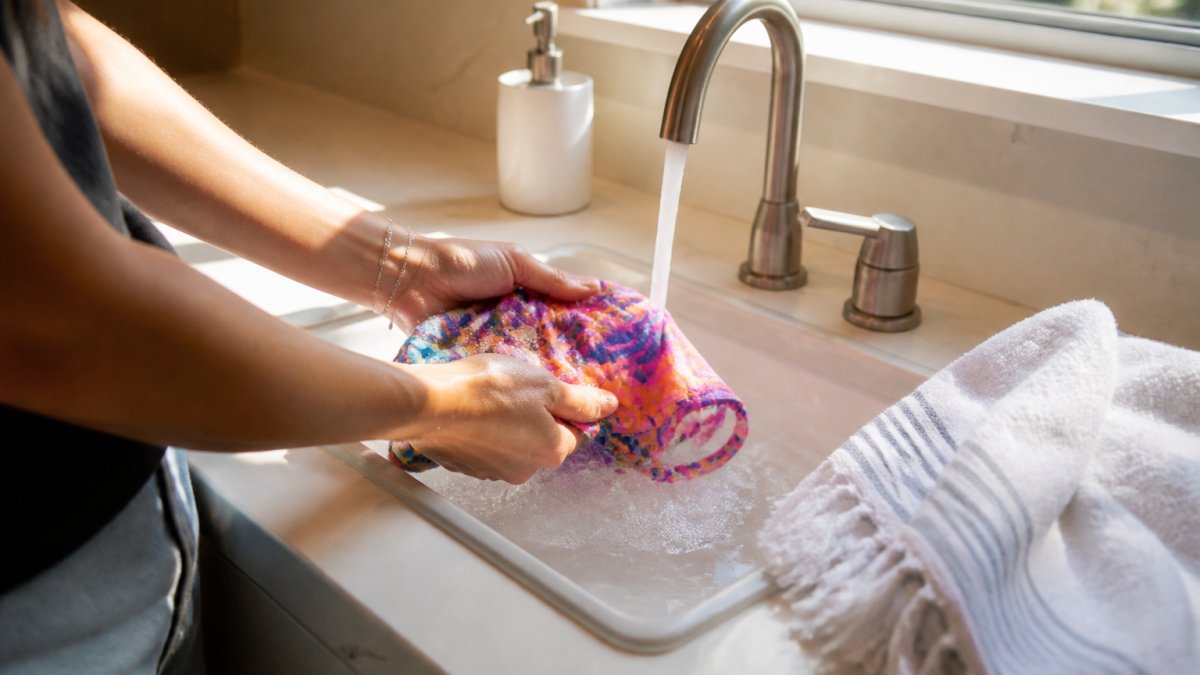
For men's suits, our guide to durable swim shorts built for long beach days covers the same care rules.
The Hidden Costs of Cheap Swimwear
Cheap suits also fail at the worst time. A stretched-out suit on vacation, a faded suit by mid-summer. And they end up in the trash faster, which is a growing concern. A 2025 Aalborg University study on performance swimwear sustainability explores the environmental impact of swimwear and pushes for longer product life.
Choosing Swimwear Built for South Bay Summers
South Bay Gear has roots dating back to 1960 in Manhattan Beach. Our tie dye custom bikini swimsuit is made from 85% polyester and 15% spandex and features an all-over print made using heat sublimation. It's $38.72.
The Tie Dye Custom Bikini Swimsuit listing describes it as suitable for swimming, training, surfing, and beach activities. Its listing says to machine wash cold, use non-chlorine products, and dry in the shade.
Frequently Asked Questions
Do swimsuits stretch over time?
Yes. Elastane and spandex fibers break down from chlorine, heat, and repeated stretching, so suits gradually lose shape retention and support. A 2026 RMIT University release notes that 300 hours of chlorine and sunlight exposure can cut a swimsuit's strength by 65%, roughly 35 summer days of swimming. Quality swimwear with higher polyester content and better stretch recovery resists this longer, but no suit stays tight forever.
How long should a swimsuit last?
It depends on use. Jaze Swim estimates 3 to 6 months for frequent pool swimmers, while recreational swimmers who rinse and air dry after each use often get a year or more. Chlorinated pools wear suits fastest, saltwater and sun next. A suit that still fits well but has thinning fabric or faded color is near the end, even if it looks fine dry.
What are good quality swimsuits made of?
The Tie Dye Custom Bikini Swimsuit listing specifies 85% polyester and 15% spandex.
Does chlorine damage swimwear?
Yes. Chlorine breaks down elastane fibers, causing loss of stretch, sagging, and color fading over time. Rinsing in cold water immediately after every pool session removes lingering chlorine before it sets in. Suits labeled chlorine-resistant, typically polyester-based, handle repeated pool exposure far better than generic spandex blends, which is why quality swimwear is worth the higher upfront price for regular swimmers.
Your swimsuit should last more than one summer. It can, if you buy the right fabric and treat it well. South Bay Gear makes classic coastal swimwear with real polyester-spandex construction, local roots since 1960, and free shipping on select items. Get started with South Bay Gear and find a suit built for the sand, sun, and sea.

0 comments