Table of Contents
- Why Quality Swimwear Loses Shape Fast: The Real Causes
- What Pool and Ocean Water Do to Elastic Fibers
- Fabric Composition: Why Nylon, Spandex, and Lining Matter
- How to Wash a Swimsuit So It Keeps Its Shape
- How Long Should a Swimsuit Last? Pool Exposure and Swim Frequency
- How to Make Swimsuits Last Longer: A Measurable Care Routine
- Signs It's Time to Retire a Swimsuit
- Frequently Asked Questions
Last Updated: October 9, 2026
Why Quality Swimwear Loses Shape Fast: The Real Causes
A suit that sags after a few weeks is rarely a cheap suit. Most of the time, it is a good suit that met chlorine, heat, and heavy sunscreen all at once. That mix breaks down elastic fibers fast, no matter what you paid. This guide from South Bay Gear explains why quality swimwear loses shape fast, how to spot the real cause, and how to slow it down.
We have watched this play out on the sand since 1960. A suit bought in June can look tired by August. The fabric is not the whole story.
It's Usually Not the Price Tag
Price buys better materials and better stitching. It does not buy immunity from pool water. A high-end suit and a budget suit both rely on stretch fibers to hold their shape. Those fibers fail for the same reasons.
Here is what actually drives the damage:
- Chlorine exposure weakens elastic fibers over time
- Salt water and dampness break down fabric when a wet suit sits in a bag
- Heat from hot tubs, hot cars, and dryers speeds up fiber damage
- Sunscreen and body oils leave residue that dulls and weakens fabric
- Poor fit stretches seams and lining past their limit
So when a suit loses shape fast, ask what it went through, not just what it cost.
What Pool and Ocean Water Do to Elastic Fibers
Water chemistry is the number one cause of stretch loss. Pool water and ocean water attack a swimsuit in different ways, and both speed up wear and tear on the fibers that give a suit its shape.
Chlorine Exposure and Fiber Damage
Chlorine is the hardest thing your swimsuit meets. It is designed to kill bacteria, and it does not stop at that. Repeated chlorine exposure breaks down spandex and elastic fibers, which is why a suit worn for daily laps goes slack long before one worn twice a summer.
The damage builds quietly. A suit may feel fine after one swim and weak after twenty. Chlorine also fades dye, so discoloration and fading often show up alongside sagging and warped padding.
Salt Water, Dampness, and Drying Time
Salt water is gentler than chlorine, but it still leaves salt crystals in the fabric. Those crystals rub against fibers and speed up pilling and loose threads. The bigger problem is what happens after.
A wet suit stuffed in a beach bag stays damp for hours. Dampness plus warmth is a recipe for fiber breakdown. Rinse saltwater exposure off with fresh water and air-dry the suit before it goes back in the bag.
Fabric Composition: Why Nylon, Spandex, and Lining Matter
Fabric composition decides how well a suit holds its shape. Two suits can look the same on the rack and behave very differently after ten swims. The reason comes down to three variables: the stretch fiber, the base fiber, and how the fabric is built.
The Stretch Fiber: Spandex (Elastane)
The stretch comes from spandex, also called elastane. Spandex is a segmented polyurethane fiber: soft segments stretch, hard segments hold the fiber together and pull it back. When chlorine, heat, or oils attack those hard segments, the fiber stops snapping back. That is the moment a suit starts to sag. More spandex means more stretch recovery when new, but also more fiber that can fail. A suit labeled 80% nylon / 20% spandex has more stretch potential than a 90/10 blend, but it also has more spandex to lose.
The Base Fiber: Nylon vs. Polyester
The body and colorfastness usually come from nylon or polyester. They behave differently:
- Nylon is softer and stretches more, but it absorbs water and breaks down faster in chlorine. It is common in fashion and beach suits.
- Polyester is more chlorine-resistant and holds color longer, but it feels less soft against skin. It is common in training and lap suits.
This is why a nylon suit worn for daily laps can go slack in weeks, while a polyester suit in the same pool lasts a season.
Fabric Weight and Lining
Two more variables matter as much as the blend:
- Fabric weight. Measured in grams per square meter (GSM), heavier fabrics resist see-through and sag better than thin ones. A thin, single-layer fabric with no lining tends to sag and show wear faster than a lined suit.
- Lining. A full front lining adds a second layer that supports the outer fabric and hides stretch. Unlined suits show every pulled fiber.
Match the Fabric to the Use
| Use case | Best blend | Why |
|---|---|---|
| Daily lap swimming | High polyester, moderate spandex, full lining | Polyester resists chlorine; lining supports stretch |
| Beach and sun | Polyester blend | Resists fading and color loss |
| Mixed recreation | Balanced nylon/spandex with lined front | Softer feel with enough recovery |
| Competitive training | Polyester/spandex, heavier GSM | Holds shape through frequent exposure |
Our Tie Dye Custom Bikini Swimsuit uses an 85% polyester, 15% spandex blend with a heat sublimation print that resists fading in water. That mix is built for pool and beach days alike. For kids who live in the water all summer, the Big Boys' Sharky Swimming Trunks use the same 85/15 blend in sizes for boys 8 to 15.
Tie Dye Custom Bikini Swimsuit →


How to Wash a Swimsuit So It Keeps Its Shape
Washing is where most suits are lost. The fix is simple: rinse after every wear, hand-wash with gentle detergent, and never put a suit in the dryer. But the details matter more than the headline advice, and manufacturer care instructions always take priority over general guidance.
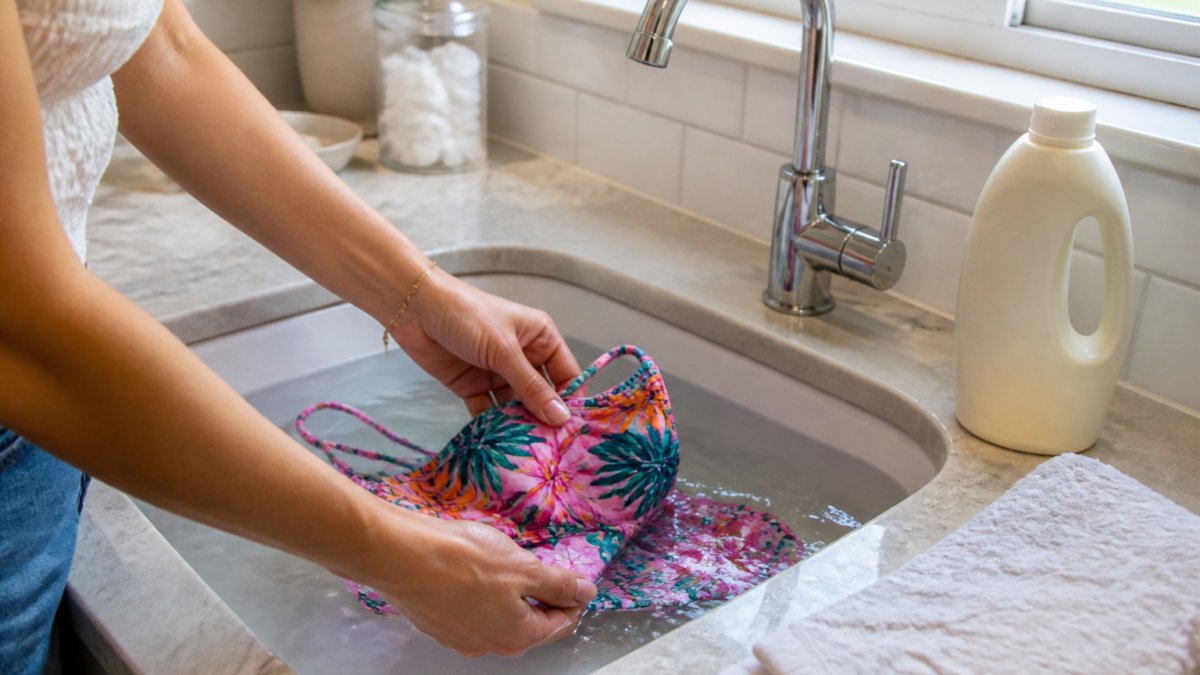
A Measurable Rinse and Wash Routine
Follow these steps with specific timing and temperatures:
- Rinse in cool water (below 80°F) right after you swim. This clears chlorine and salt before they set in. One minute is enough for a full rinse.
- Hand-wash with a gentle detergent every 2 to 3 wears. Use a capful in a sink of cool water. Skip harsh soap, bleach, and fabric softener, which coat fibers and reduce stretch recovery.
- Squeeze, do not wring. Twisting stretches the elastic fibers. Press the suit between your palms or roll it in a towel.
- Lay flat or hang in the shade to air-dry. Sun and heat break down spandex. Drying time is typically 2 to 4 hours indoors.
- Never use a dryer or an iron. Heat is the fastest way to ruin stretch recovery. Even low heat can warp padding and lining.
When Manufacturer Instructions Take Priority
Some suits have specific care labels that override general advice. If the label says hand-wash only, do not machine-wash on gentle. If it says line dry, do not lay flat. If it lists a maximum temperature, follow it. When in doubt, the label wins.
Diagnosing Care-Related vs. Quality-Related Damage
Not every sagging suit is a care problem. Use this quick check to separate the two:
- Care-related damage usually shows up as fading, pilling, or a suit that sags evenly across the body. It often follows a pattern: heavy chlorine exposure, no rinsing, or dryer use.
- Quality-related damage usually shows up as seams pulling apart, lining separating, or stretch loss concentrated in one area (straps, seat) while the rest of the suit holds. This points to construction or fiber quality, not care.
If a suit fails the care check but you followed the routine above, the issue is likely the fabric or construction, not your habits.
How Long Should a Swimsuit Last? Pool Exposure and Swim Frequency
A swimsuit lasts about one season of regular pool swimming, or two to three years with light use and good care. Swim frequency and chlorine exposure decide the timeline more than price does.
Think in swims, not months:
- 1 to 2 swims a week: a suit can hold shape for a full season or more
- 3 to 4 swims a week: expect visible stretch loss within a few months
- Daily lap swimming: plan on replacing the suit each season
If you swim in a chlorinated pool most days, no fabric will last forever. Rotate two suits so each one gets time to recover and dry fully.
How to Make Swimsuits Last Longer: A Measurable Care Routine
A care routine works best when you can measure it. Use this simple schedule to protect shape retention and stretch recovery.
| Task | When | Time Needed |
|---|---|---|
| Rinse in cool water | After every swim | 1 minute |
| Hand-wash with gentle detergent | Every 2 to 3 wears | 5 minutes |
| Air-dry in the shade | After every wash | 2 to 4 hours |
| Check seams and lining | Once a month | 2 minutes |
| Rotate between two suits | All season | Ongoing |
Signs It's Time to Retire a Swimsuit
A swimsuit is done when it no longer holds its shape, not when it looks old. Watch for these signs:
- Sagging in the seat or straps that no longer snap back
- Warped padding that will not sit flat
- Loose threads or seams that pull apart
- Pilling and thin spots in the fabric
- Discoloration or fading that rinsing will not fix
Fit and sizing matter here too. A suit that is too tight stretches past its limit, and one that is too loose sags and rubs. Check the size chart before you buy, and size up if you are between sizes.
Most suits do not fail because they were cheap. They fail because chlorine, heat, and dampness got to the elastic fibers before anyone rinsed them out. A one-minute rinse and a shade-dried suit go a long way toward keeping shape season after season. At South Bay Gear, our swimwear is built for exactly this kind of coastal life, with fade-resistant prints, durable polyester and spandex blends, and sizes for the whole family. Shop all and find a suit made to hold its shape from the first swim to the last.
Frequently Asked Questions
Why does my swimsuit lose its shape so fast?
The main culprits are chlorine, salt water, heat, and sunscreen residue breaking down spandex fibers, plus poor fit that overstretches the fabric. Even quality swimwear loses shape fast when it sits damp in a bag or gets tossed in a hot dryer. Rinsing in cool water right after every swim and air-drying in the shade removes most of the damage before it starts.
How long should a swimsuit last with regular pool use?
A suit worn once or twice a week in a chlorinated pool typically holds its shape for about six months to a year. Swim more often, or wear a thinner single-layer suit, and that window shrinks. Rinsing after every session, rotating two or three suits, and avoiding hot tubs can push a well-made suit closer to the year mark.
Can I machine wash a swimsuit to make it last longer?
Machine washing is risky because agitation stretches elastic fibers and can snag loose threads. If you do machine wash, use cold water (max 104°F), a gentle cycle, and a mesh bag, and never use chlorine bleach. Hand-washing in cool water with a gentle detergent takes two minutes and is the single easiest way to make swimsuits last longer.
How do I tell if my swimsuit is worn out or just stretched?
Check three things: sagging in the seat or straps that no longer snap back, warped padding that won't lie flat, and fabric that looks thin, pilled, or discolored when held to light. If the suit springs back after a wash, it's stretched and recoverable. If the elastic stays limp, the fibers are damaged and it's time to retire a swimsuit.
0 comments