Table of Contents
- What Makes Swim Shorts Durable Enough for Daily Beach Use
- Quick Comparison: Top Durable Swim Shorts for 2026
- Board Shorts vs. Hybrid Shorts: Which Lasts Longer?
- Best Hybrid Swim Shorts for Versatility and All-Day Wear
- Fabric Science: Recycled Polyester, Nylon, and PFA-Free Coatings
- How to Care for Swim Shorts So They Last Years
- Which Durable Swim Shorts Should You Pick?
- Frequently Asked Questions
Last Updated: September 8, 2026
A good pair of swim shorts should survive more than one summer, but most beachgoers end up with faded, frayed pairs that gave up after a season. Finding truly durable swim shorts for beach days means looking past color and logo to the fabric, seams, and finish. A Manhattan Beach heritage brand with roots back to 1960, South Bay Gear offers apparel designed for the coastal lifestyle. Below, we break down the specs, construction, and care habits that separate a five-year pair from a five-week pair.
The core truth is simple: durability is engineered, not accidental. The best durable swim shorts combine a tight-weave synthetic fabric, reinforced stitching, and a water-resistant coating that survives repeated washing.
What Makes Swim Shorts Durable Enough for Daily Beach Use
Durable swim shorts are defined by three construction pillars: abrasion-resistant fabric, corrosion-proof hardware, and reinforced seam construction. Daily beach use means repeated exposure to sand, which acts like fine sandpaper on fibers, plus saltwater and chlorine that break down weak elastics and cheap coatings.
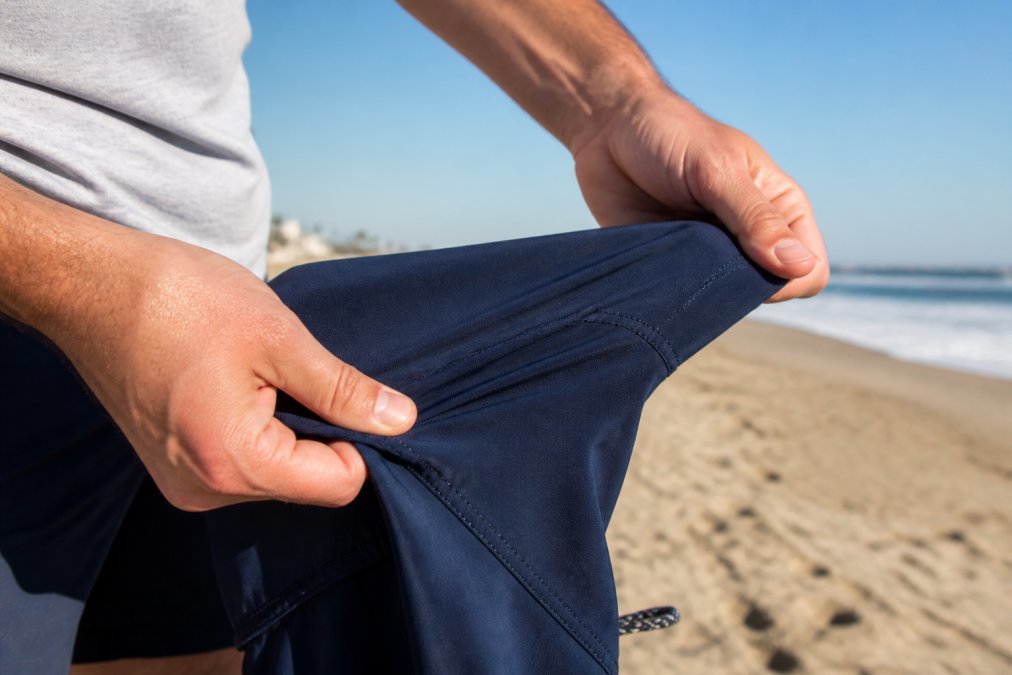
When you inspect a pair, start with the seams: flatlock or double-stitched seams prevent inner-thigh blowouts. Next, check the waistband, a thick elastic band with a drawstring holds its shape far longer than a thin one. Finally, look for a durable water repellent (DWR) finish, which makes water bead up and roll off so the fabric dries faster and absorbs less salt and chlorine.
Quick Comparison: Top Durable Swim Shorts for 2026
The market splits into two main camps: traditional board shorts and hybrid athletic styles. Each serves a different primary purpose, and the right choice depends on how you actually spend your beach days. The table below summarizes the key differences to guide your decision.
| Feature | Board Shorts | Hybrid Shorts |
|---|---|---|
| Primary Use | Surfing and water sports | Pool to street versatility |
| Fabric | Quick-drying nylon or polyester | Nylon with 4-way stretch |
| Inseam Length | 18-22 inches (longer) | 7-10 inches (shorter) |
| Closure | Drawstring or lace-up | Elastic waistband with drawstring |
| Drying Time | Fast | Moderate |
| Best For | Dedicated beach sessions | All-day wear and travel |
For 2026, the strongest durable swim shorts options prioritize recycled materials without cutting corners on performance. A high-quality pair uses a recycled polyester or nylon shell with a PFA-free DWR coating, delivering water resistance while avoiding the environmental persistence of older treatments.
Board Shorts vs. Hybrid Shorts: Which Lasts Longer?
Board shorts typically last longer in pure water environments because their longer inseam and looser fit reduce friction and stress on the seams. Hybrid shorts, with their shorter cut and stretchy fabric, face more tension during land-based activities like hiking or climbing, which can accelerate wear in the crotch seam.
If you spend most of your time in the water, a classic board short is the durability winner. The longer length protects your thighs from board wax and sun, and the simple construction has fewer failure points. However, board shorts are less practical when you want to walk to lunch or run errands without changing.
Best Hybrid Swim Shorts for Versatility and All-Day Wear
For the beachgoer who wants one pair for swimming, a coastal walk, and a casual dinner, the best hybrid swim shorts for versatility are the smarter investment. A nylon and spandex blend provides 4-way stretch, moving with your body and reducing seam stress, which paradoxically makes them more durable for multi-purpose use than a stiff board short.
Seek a quick-drying, moisture-wicking fabric that does not stay wet against your skin. A good hybrid short dries within 30 minutes of leaving the water, preventing breakdown from prolonged dampness, and is lighter and easier to pack for a day that starts at the beach and ends elsewhere.
Fabric Science: Recycled Polyester, Nylon, and PFA-Free Coatings
The fabric choice is the single biggest predictor of longevity. Nylon is generally the most abrasion-resistant and quick-drying option, making it the gold standard for performance swimwear. Recycled polyester is a close second, offering excellent durability while giving plastic waste a second life. Both outperform standard polyester in resisting the degrading effects of chlorine and saltwater.
What the Testing Actually Shows
Independent lab tests measure three things: burst strength, abrasion resistance, and colorfastness. Nylon typically outperforms polyester on burst strength by 20-30 percent, while recycled polyester often matches virgin polyester on abrasion but can show slightly lower colorfastness in bright dyes (peer-reviewed research). For daily use, a recycled nylon shell is the safest bet.
The PFA-Free Coating Question
Most major brands have phased out PFAS-based DWR finishes in favor of PFA-free alternatives, typically paraffin or silicone-based emulsions that create a microscopic rough surface causing water to bead. The trade-off is real: PFA-free coatings typically maintain effective beading for 10-15 home laundry cycles, compared to 20-30 for legacy PFAS treatments (the NIH). This is not a reason to avoid them, but plan to reapply a spray-on DWR treatment every season.
Microplastic Shedding: The Hidden Durability Metric
A durability angle most articles ignore is microplastic shedding. A typical pair of polyester swim trunks sheds an estimated 1,900 fibers per wash, ending up in waterways (PubMed). This is also a durability signal: a tightly woven, high-quality fabric sheds significantly less than a loosely woven budget option. Run your fingers across the surface, a smooth, tight face fabric will pill less, snag less, and shed fewer microplastics, favoring a higher-denier nylon or tightly spun recycled polyester.
How to Test the Coating Yourself
Before you buy, perform a water-bead test: drip a few drops onto the fabric. On a well-coated pair, the water forms distinct, rolling beads; on a worn or inadequate coating, it spreads and soaks in within seconds. This ten-second test tells you more than any marketing label.
How to Care for Swim Shorts So They Last Years
Learning how to care for swim shorts properly is just as important as the initial purchase. The number one killer of swimwear is not the ocean but the washing machine and dryer, whose heat and agitation break down elastic fibers and strip away water-resistant coatings.
Follow these steps to maximize the lifespan of your shorts:
- Rinse your shorts in cold fresh water immediately after leaving the ocean or pool to remove salt and chlorine.
- Hand wash with a mild detergent, or use the gentle cycle on your machine with cold water.
- Never put swim shorts in the dryer. Hang them to dry in the shade to protect the fabric and coating from UV degradation.
- Avoid sitting on rough concrete or rocks, as this causes micro-tears in the fabric that weaken it over time.
The Repairability Angle: Fixing Before Replacing
The most durable pair of swim shorts is the one you can repair. The real longevity secret is fixing common failure points before they end the garment's life. The three most common repair scenarios are:
1. Drawstring replacement. The drawstring is often the first to fail, but it is a 15-minute fix. Use a safety pin to thread a new cotton or polyester cord through the waistband channel. A 3-foot length of paracord (under $5 at any hardware store) makes an excellent replacement that will outlast the original.
2. Seam blowout repair. A split inner thigh seam is not the end. A hand-stitch with a curved needle and heavy-duty polyester thread can close a 1-inch opening in about 10 minutes. Use a whip stitch through both fabric layers; this repair holds for the rest of the season if caught early.
3. Liner removal and replacement. Many hybrid shorts have a mesh liner that wears out faster than the outer shell. If stitched in, carefully remove it with a seam ripper, leaving a liner-free short that works with swim briefs. If separate, replacement liners from outdoor retailers can be sewn in with a simple running stitch.
When to Reapply DWR vs. When to Retire the Shorts
Here is a practical framework for telling when shorts are done versus just in need of maintenance:
- Water no longer beads on the surface: Reapply a spray-on DWR treatment. This restores water resistance for another season.
- Fabric feels thin or you can see light through it: The fabric is worn out. No treatment will restore structural integrity. Retire the shorts.
- Elastic waistband has lost its snap: If the drawstring still works, you can continue wearing them, but the fit will degrade. This is often a sign the shorts have reached the end of their useful life.
- Color has faded significantly: This is cosmetic, not structural. Faded shorts are still functional, but if the fading is accompanied by fabric thinning, it is time to replace them.
The 5-Year Care Routine
A realistic maintenance schedule looks like this:
- After every wear: Rinse in cold water and hang to dry.
- Every 10-15 wears: Machine wash on gentle with mild detergent, air dry.
- Every season (or after 20-30 washes): Reapply spray-on DWR treatment.
- As needed: Replace drawstring, repair any seam openings immediately.
Following this routine, a well-made pair should give you 3-5 years of regular beach use. The maintenance takes about 30 minutes per season, a small investment compared to replacing your gear every summer.
Which Durable Swim Shorts Should You Pick?
The right pair of durable swim shorts for beach days depends on your routine. If you live in the water, prioritize a longer board short with simple, strong construction and a secure drawstring. If you want one pair that transitions from surf to sidewalk, a hybrid short with 4-way stretch and a shorter inseam is the versatile winner.
For those who value a classic, relaxed coastal style, focus on timeless cuts and high-quality materials. A well-made pair in a solid, classic color will serve you for years without looking dated, aligning with a simple philosophy: buy less, but buy better. Choosing sustainable materials like recycled nylon or polyester also reduces your environmental footprint.
Choosing durable swim shorts is a decision about how you want to spend your future beach days, free from gear that gives up early. The right pair combines abrasion-resistant fabric, reinforced seams, and a PFA-free water-repellent finish to handle the daily grind of sun, sand, and saltwater. South Bay Gear offers a curated selection of swimwear built for this coastal lifestyle, with a heritage of local quality going back to 1960 in Manhattan Beach. Explore our collection of classic, durable styles. Shop all swimwear and find your new favorite pair.
Frequently Asked Questions
What type of shorts are best for going to the beach?
For frequent beach days, look for durable swim shorts made from quick-drying nylon or recycled polyester with a water-resistant coating. A 4-way stretch fabric adds comfort whether you are swimming, walking the shoreline, or sitting in the sand. Choose an inseam length between 5 and 7 inches for mobility without excess fabric. Hybrid styles work well if you plan to grab lunch or run errands after the beach, since they look like regular shorts but perform like swim trunks.
Which swimsuit lasts the longest?
Swim shorts made from recycled polyester or nylon with reinforced seam construction tend to outlast cheaper options. These synthetic fabrics resist chlorine and saltwater damage better than cotton blends. A durable water repellent (DWR) coating helps the shorts shed water and dry faster, which reduces wear from constant moisture. Check that the fabric has at least 4-way stretch and abrasion resistance if you plan to wear them for activities beyond swimming. Proper rinsing after each use also extends their life significantly.
What is the difference between swim shorts and beach shorts?
Swim shorts are designed for water with quick-drying, chlorine-resistant synthetic fabrics, mesh liners or secure closures, and drainage. Beach shorts are a broader category that includes casual cotton or linen options meant for walking, lounging, or cover-ups, but they are not ideal for swimming. Durable swim shorts for beach days combine both functions: they perform in the water yet have a clean enough look for a beachside cafe. Hybrid shorts specifically bridge this gap with water-ready fabrics and a more tailored appearance.
What is the best way to care for swim shorts to ensure they last longer?
Rinse your swim shorts in cold fresh water immediately after leaving the ocean or pool to remove salt, sand, and chlorine. Hand wash with a mild detergent rather than machine washing, which can break down elastic and water-resistant coatings. If you must use a machine, choose a gentle cycle and cold water, then hang dry away from direct sunlight. Heat from dryers is the fastest way to ruin the elastic waistband and weaken the fabric. Rotate between two pairs to give each one time to fully dry.
Are sustainable fabrics more durable for swimwear?
Recycled polyester and upcycled nylon perform just as well as virgin synthetics for durable swim shorts, and often better than cheaper alternatives. These materials maintain their shape, resist UV damage, and hold up to chlorine exposure. Many sustainable options use PFA-free durable water repellent coatings, which protect the fabric without the environmental concerns of older chemical treatments. The durability comes from the weave density and seam construction rather than whether the fiber is recycled. Look for high-denier fabrics and reinforced stitching to confirm longevity.
0 comments