Table of Contents
- Start With a Real Measurement Session, Not a Guess
- Read the Swimwear Size Guide Like a Shopper, Not a Skimmer
- Judge Fabric and Construction Before You Add to Cart
- Decode Product Photos, Model Shots, and Customer Reviews
- Check the Online Swimwear Return Policy and Final-Sale Rules First
- Build Beach Outfit Ideas Around What You Already Own
- Shop Unfamiliar Stores Without Getting Burned
- Troubleshoot the Fit Before You Give Up on the Order
- Frequently Asked Questions
Last Updated: October 18, 2026
Start With a Real Measurement Session, Not a Guess
Buying beach wear online works best when you start with three numbers, not a guess. This guide from South Bay Gear turns those numbers into a swimsuit that fits.

A size label means nothing on its own. A "Medium" from one seller can fit like a "Small" from another. Your measurements are the only fixed point, so build every decision around them.
How to Measure Bust, Waist, and Hips Correctly
Stand in front of a mirror, wear light clothing, and keep the tape snug but not tight.
- Bust: Measure around the fullest part, keeping the tape level across your back.
- Waist: Measure at the narrowest point, usually just above the belly button.
- Hips: Measure around the fullest part, roughly 8 inches below the waist.
Write the numbers down right away. Guessing from memory is how most returns start.
Matching Measurements to Different Swimsuit Cuts
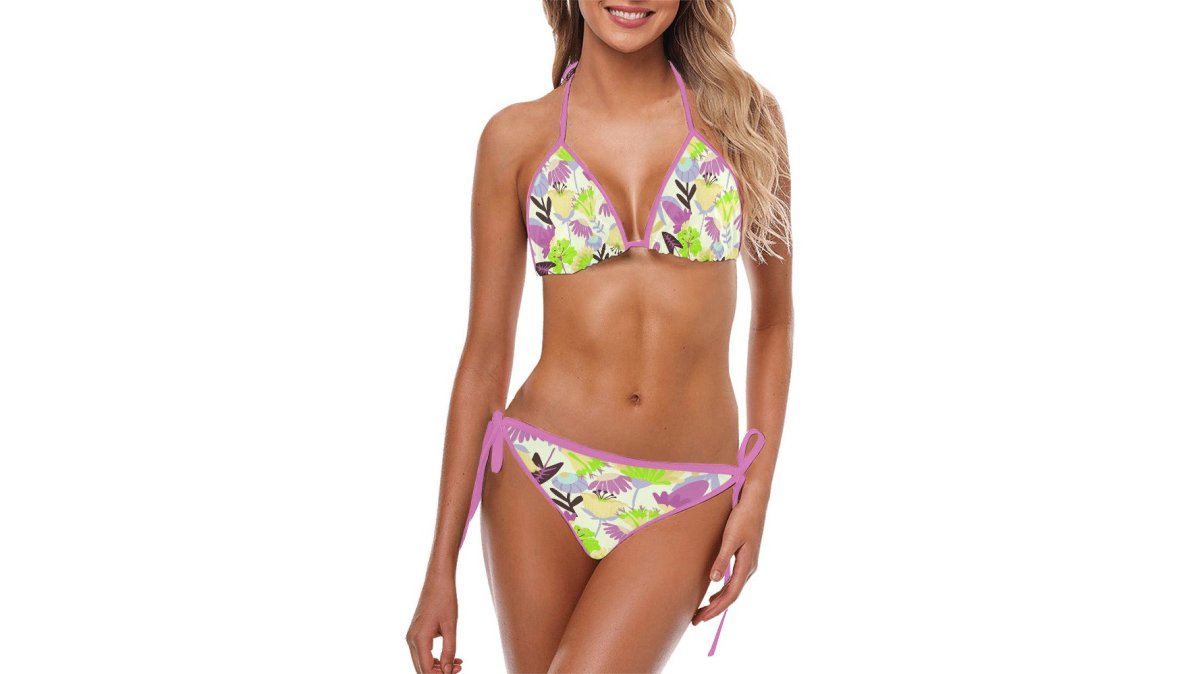
One-piece suits need your torso length to fit well. Bikini tops and bottoms are often sold separately, so size each piece on its own, and check the rise of high-waisted bottoms against your waist. For custom-printed styles like the South Bay Print Custom Bikini Swimsuit, order from your measurements, not your dress size.
Read the Swimwear Size Guide Like a Shopper, Not a Skimmer
A swimwear size guide maps body measurements to each size and is the most useful page on any online store. Read it before the photos. Most shoppers skim it, pick their usual size, and end up with an exchange.
Here is how to use one properly:
- Find the chart for the exact item, not a general brand chart.
- Compare your bust, waist, and hip numbers to the chart, not your dress size.
- If you land between two sizes, size up for one-pieces and check top and bottom sizing separately for two-piece suits.
Size charts are not universal; each product page can carry its own measurements, so check every time. The South Bay Tie-Dye Floral Pattern Ladies One Piece Swimsuit lists Euro sizing, a reminder to read the notes, not just the letters.

Judge Fabric and Construction Before You Add to Cart
The best fabric for swimwear balances stretch, shape retention, and comfort. Look for spandex for stretch and polyester or nylon for durability, then read the construction details.
What the Fiber Blend Actually Tells You
Most swimwear uses a main fiber for body and a stretch fiber for recovery.
- Spandex (also sold as elastane or Lycra): The stretch component. A higher share means a snugger, more supportive fit, but heat and chlorine break spandex down first, so care instructions matter as much as the blend.
- Polyester: Resists chlorine, holds color well, and dries faster than nylon. Common for frequent pool use.
- Nylon: Softer against the skin, but absorbs more water and fades faster with repeated chlorine exposure.
Lining, Opacity, and the Wet Test
- Full lining covers the front and often the back, holds shape, and provides coverage when wet. Safest for light colors and thin fabrics.
- Front-only lining is common in fashion suits, but check customer photos for sheerness in lighter colorways.
- Unlined suits can work in dark, thick fabrics, but they offer the least coverage insurance.
Opacity is a fabric-and-color question. When in doubt, choose a darker colorway or a fully lined suit.
Stretch, Recovery, and Chlorine Resistance
Stretch is how far the fabric gives; recovery is how well it snaps back.
For laps or long pool days, favor polyester-rich blends and rinse in cool fresh water after each swim. If your beach wear is mostly for sand and sun, nylon blends are fine if you rinse salt and sunscreen out promptly.
Drying Time and Care Trade-Offs
Polyester blends dry faster than nylon, and thin, unlined suits dry faster than thick, fully lined ones.
Care rules that protect the fabric:
- Rinse in cool water after every wear to remove salt, chlorine, and sunscreen.
- Hand wash or use a cold, gentle machine cycle.
- Skip the dryer. Heat breaks down stretch fibers faster than anything else.
Construction Details Worth Checking
- Stitching: Flatlock or reinforced seams resist pulling and chafing better than simple overlock stitches on high-stress areas.
- Straps: Adjustable straps let you fine-tune support, and wide straps distribute weight better on larger busts.
- Hardware: Metal rings and clasps should feel solid, not flimsy; plastic hardware is lighter but can crack.
Decode Product Photos, Model Shots, and Customer Reviews
Product images tell you more than the price tag. Study the model's height and the size she is wearing, then compare that to your own measurements. A suit on a taller model will sit differently on you.
Use photos and reviews together:
- Zoom in on seams, straps, and lining to judge quality.
- Check the size the model wears and how the fit looks on her frame.
- Read reviews for notes on fit, coverage, and whether the item runs small or large.
Reviews that mention specific measurements beat star ratings alone: "I'm a 34C and the medium top fit well" gives you something to compare against your own numbers.
Check the Online Swimwear Return Policy and Final-Sale Rules First
An online swimwear return policy usually requires tags attached and hygiene liners intact, and many stores refuse returns on final-sale items. Read it before you order.
Look for these terms:
- Return window: How many days you have to send it back.
- Condition rules: Tags on, liners intact, unworn and unwashed.
- Final-sale items: Often not returnable, even if the fit is wrong.
Hygiene rules protect you too, which is why sizing comes first. Getting the size right up front beats relying on a return.
South Bay Print Custom Bikini Swimsuit Free Shipping →
Build Beach Outfit Ideas Around What You Already Own
Smart beach outfit ideas start in your own closet, and beach wear means more than swimwear. A complete beach bag includes layers and cover-ups that work with the suits you already own.
The Four Layers of a Beach Outfit
Think of beach wear as a system rather than a single purchase:
- Base layer: The swimsuit itself, chosen for fit and fabric as covered above.
- Cover layer: A cover-up, rash guard, or oversized shirt that takes you from the sand to a boardwalk lunch.
- Bottom layer: Swim shorts, board shorts, or a skirted bottom for shoppers who want more coverage than a standard bikini bottom.
Building around what you own means buying one or two new pieces that coordinate with the rest, not replacing the whole bag each season.
Cover-Ups: Match the Fabric to the Job
- Cotton gauze and muslin: Breathable and soft, but wrinkles easily and dries slowly if it gets wet. Good for dry beach days and lunches.
- Terry cloth: Absorbent and warm after a swim, but heavy and slow to dry. Best for poolside rather than packing.
- Chiffon and lightweight polyester: Pack small and dry fast, but offer little warmth and can be sheer in light colors.
Check the length against your height as you would a swimsuit: a cover-up that hits mid-thigh on a 5-foot-9 model will sit longer on a shorter frame. Look for the model's height in the product details.
Rash Guards and Swim Shirts: Fit and Function
A rash guard is a fitted top made for sun and water. It should fit close to the body without restricting movement.
- Check the sleeve length and whether the cut is athletic or relaxed.
- Confirm the UPF rating if sun protection is the goal.
- Look for flatlock seams.
Swim Shorts and Board Shorts: Length and Liner
Swim shorts and board shorts are sold by inseam length, and that number matters more than the size label. A 5-inch inseam sits mid-thigh, a 7-inch hits closer to the knee, and a 9-inch or longer is a traditional board short.
Also check whether the shorts have a built-in liner or brief. A liner replaces underwear. Look for a drawstring waist and a secure pocket with a closure if you plan to swim in them.
Coordinating Pieces Without Buying a Matching Set
You do not need a matching set to look put-together. A simple formula works for most days:
- One swimsuit as the base layer
- A light cover-up or oversized shirt in a neutral that matches two or three suits
- A hat and sunglasses for sun cover
If you want a coordinated look, pick one accent color that appears in your suit and repeat it in the cover-up or hat. That reads as intentional without requiring a set.
Shopping These Pieces Online
The same rules apply to cover-ups and shorts, with a few additions:
- Check fabric content, because a "lightweight" cover-up may be too sheer.
- Confirm the return policy, since cover-ups and shorts are sometimes final sale in seasonal drops.
- Read reviews for shrinkage and color-fade notes, especially on cotton and linen.
Beachwear goes beyond the swimsuit. A good hat, a visor, and a relaxed cover-up carry you from the sand to a beachside lunch without a full change.
Shop Unfamiliar Stores Without Getting Burned
Shopping safely across unfamiliar websites comes down to a few quick checks. Before you enter card details, confirm the store is real, the policies are clear, and the contact options work.
Run through this list:
- Look for a physical address and a working contact page
- Read the shipping and return policies in full
- Check reviews on independent sites, not just the store's own page
A store that hides its return policy or offers no way to reach a person is a warning sign. Trust the basics over a flashy homepage.
Troubleshoot the Fit Before You Give Up on the Order
Fit problems usually have a fix. Try the suit on at home, over your underwear, before you remove tags.
Match the problem to the fix:
| Problem | Likely Cause | Fix |
|---|---|---|
| Straps dig in | Top too small or straps not adjusted | Loosen adjustable straps or size up the top |
| Gapping at the bust | Cup too large or cut mismatch | Try a smaller top or a different style |
| Bottoms ride up | Wrong rise or size | Switch to high-waisted or size up |
| Suit feels tight all over | Fabric needs to stretch to fit | Size up; spandex relaxes slightly in water |
| Waistband rolls | Band too narrow for your shape | Choose a wider band or higher rise |
If you are between sizes, size up for one-pieces and check each piece separately for two-pieces. Keep the tags on until you are sure. That keeps your return options open while you decide.
Frequently Asked Questions
How do you choose the right size when buying swimwear online?
Measure your bust, waist, and hips with a soft tape, then compare those numbers to the retailer's own swimwear size guide rather than your usual clothing size. Swimwear runs differently from jeans or dresses, and sizing varies by brand. If you land between two sizes, size up. Also check whether the chart is in US or European sizing, since some listings use Euro codes.
What should you check in an online swimwear return policy before buying?
Look for three things: the return window, the hygiene rule, and final-sale exclusions. Most retailers require swimwear to be returned with the protective liner intact and tags attached, and many refuse returns on suits that have been worn in water. Confirm who pays return shipping and whether you get a refund or store credit. Final-sale and custom-printed items are often non-returnable, so read the product page carefully before checkout.
What fabrics are best for swimwear and beachwear?
For swimwear, look for a polyester and spandex blend. A common mix is 85% polyester with 15% spandex, which gives comfortable four-way stretch. For cover-ups and beach clothing, cotton and cotton-linen blends breathe well in heat. Check whether the suit has a lining, since lining affects both coverage and how the suit feels when wet. Avoid fabrics with no stretch for anything you plan to swim in.
How can you tell if beachwear will fit well without trying it on?
Use three signals together: the size chart, the model photos, and the reviews. The chart gives you numbers, the photos show how the suit sits on a real body, and reviews tell you whether it runs small or large. Look for adjustable straps, tie sides, or adjustable leg openings, since these let you fine-tune the fit. If a listing has no measurements and no reviews, that is a reason to skip it rather than take a chance.
Finding beach wear that fits well online takes a little prep, not luck. Measure yourself, read each size chart, check the fabric and return rules, and you will order with confidence instead of crossing your fingers. South Bay Gear has dressed coastal life since 1960, with free shipping on select items and a focus on simple, classic beach wear built for sun, sand, and sea. Shop all and build a beach bag that works as hard as your summer does.
0 comments