Table of Contents
- Best Beach Hats for Sun Protection: Quick Comparison
- What Makes a Hat Truly Protective? UPF 50+ Sun Hats Explained
- 1. The Classic Wide-Brim Lifeguard Hat
- 2. The Packable Travel Hat for On-the-Go Shade
- 3. The Sporty Bucket Hat for Active Days
- 4. The Stylish Straw Hat for Beachside Lounging
- How to Choose a Sun Hat That Fits Your Face and Lifestyle
- Sun Hat Care and Maintenance: Keeping UPF Protection Strong
- Frequently Asked Questions
Last Updated: September 8, 2026
The search for the best beach hats for sun protection starts with a simple question: how much shade can one hat provide? The answer depends on fabric, brim geometry, and certification. At South Bay Gear, we know a hat earns its place when it blocks harmful rays without slowing you down. This guide breaks down top styles, what makes each protective, and how to keep that protection intact.
Below, we cover seven standout options, a comparison table, sizing guidance, and the care routine that preserves UPF ratings. The real insight most guides miss: UPF 50+ is a starting point, not a guarantee. Wind, sweat, and washing all affect how much UV radiation reaches your skin, which is why material and construction matter as much as the label.
Best Beach Hats for Sun Protection: Quick Comparison
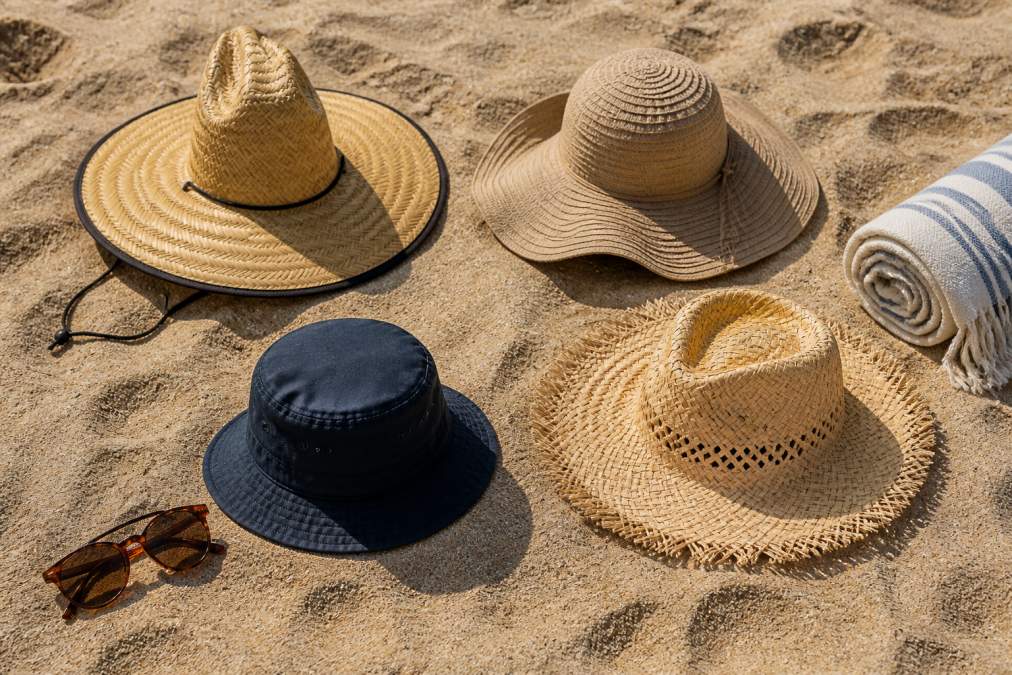
A beach hat for sun protection is only as good as its fit and fabric rating. The table below summarizes how the leading styles differ so you can match a hat to your next beach day.
| Hat Style | Best For | Key Feature | Tradeoff |
|---|---|---|---|
| Wide-Brim Lifeguard | All-day exposure | Maximum shade coverage | Bulkier to pack |
| Packable Travel | Air travel, day trips | Crush-resistant crown | Less structured brim |
| Sporty Bucket | Active water sports | Secure fit, chin strap | Shorter brim coverage |
| Straw Hat | Lounging and dining | Breathable natural fiber | Lower wind resistance |
These four categories cover most needs, but fabric, brim width, and adjustability separate a true sun-protection hat from a fashion accessory. The sections below examine each style in depth.
What Makes a Hat Truly Protective? UPF 50+ Sun Hats Explained
A UPF 50+ rating is not a marketing slogan; it is a laboratory-tested measurement of how much ultraviolet radiation a fabric blocks. The American Society for Testing and Materials (ASTM) standard D6544 and the American Association of Textile Chemists and Colorists (AATCC) Test Method 183 are the benchmarks used by accredited labs in the United States. When a hat is labeled UPF 50+, it means the fabric transmits no more than 1/50th (2%) of UV radiation, blocking both UVA and UVB rays (the FDA). This is a higher standard than the FDA's requirements for sunscreen, which only mandate broad-spectrum coverage without a specific percentage threshold.
The mechanism of protection is twofold: the tightness of the weave and the fiber's inherent UV-absorbing properties. Synthetic fibers like polyester and nylon are naturally more UV-resistant than cotton because their molecular structure absorbs more radiation. However, a loosely woven synthetic can still fail a UPF test. The certification process measures the fabric as it is manufactured, not after a season of wear. This is why the Skin Cancer Foundation's hat recommendations emphasize looking for a visible UPF label, not just a dark color or a thick feel. A black cotton baseball cap offers no certified protection; a white polyester hat with a UPF 50+ label does.
Dermatologists use a few quick checks for real-world protection. First, hold the fabric up to a bright light; if you see pinpricks of light, UV will penetrate. Second, check for a sewn-in label from a recognized testing body. Third, look at brim geometry: a 3-inch brim shades the face but leaves the neck exposed, while a 4-inch brim or legionnaire-style flap covers the neck and ears. The Skin Cancer Foundation recommends a brim of at least 3 inches all the way around, with a dark underside to absorb reflected UV rays (skincancer.org).
One angle most guides miss is the difference between inherent and treated UPF. Some fabrics achieve UPF 50+ through weave density alone, which is permanent. Others rely on a chemical UV absorber that degrades with washing. The label does not tell you which mechanism is at work; look at fabric composition. A tightly woven 100% nylon or polyester hat is more likely to have inherent protection, while cotton or linen blends often require chemical treatment. A treated fabric will lose its rating faster than an inherently protective one.
1. The Classic Wide-Brim Lifeguard Hat
The wide-brim lifeguard hat is the most protective beach hat for sun protection because its long brim shades the face, ears, and neck simultaneously. This silhouette, often seen on professional lifeguards, typically features a 4-inch brim, a rounded crown, and a chin strap to keep it anchored in ocean breeze.
The brand's version, rooted in Manhattan Beach heritage since 1960, combines a lightweight synthetic fiber that dries quickly with a moisture-wicking sweatband. For parents watching kids at the shoreline or adults reading for hours, the wide brim eliminates the need to reapply sunscreen to the face as often.
2. The Packable Travel Hat for On-the-Go Shade
A packable travel hat solves the problem of hats that lose their shape in a suitcase. These designs use a flexible, crush-resistant brim that springs back after being stuffed into a bag, making them the best beach hats for sun protection when moving between airports, boardwalks, and beaches.
The tradeoff with packable hats is that the flexible brim offers less rigid shade than a structured lifeguard hat. Many styles compensate with an adjustable toggle inside the crown, letting you tighten the fit against wind. Look for a hat that floats or at least dries quickly, since an accidental dip in the ocean should not ruin the trip. A ponytail hole is another practical feature for longer hair, keeping the hat secure without sacrificing comfort.
3. The Sporty Bucket Hat for Active Days
For swimming, paddleboarding, or chasing kids along the surf line, a bucket hat with a chin strap stays put when other styles fly off. The downturned brim provides decent shade coverage while the bucket silhouette keeps sun off the crown and the back of the neck when you tilt your head forward.
Bucket hats have moved beyond their utilitarian reputation into a mainstream summer accessory, and modern versions use quick-dry synthetic fibers with ventilation eyelets for thermal regulation. The brim on a bucket hat is typically shorter than a lifeguard hat, usually 2.5 to 3 inches, so it suits active use better than stationary lounging. If you plan to swim with the hat on, verify that the chin strap uses a breakaway clasp for safety.
4. The Stylish Straw Hat for Beachside Lounging
A natural straw hat delivers breathability that synthetic fibers cannot match, making it the most comfortable beach hats for sun protection during still, hot afternoons. The open weave allows heat to escape when you are relaxing rather than moving.
The limitation of straw is durability. Natural straw loses integrity when soaked, and the weave can stretch or crack under repeated sun exposure. A high-quality straw hat with a UPF 50+ certified liner or a tight enough weave to block UV radiation offers genuine protection, but it demands more careful handling than a packable synthetic. Reserve straw hats for dry, low-wind settings, and store them upside down on the crown to prevent the brim from drooping.
How to Choose a Sun Hat That Fits Your Face and Lifestyle
Choosing a sun hat comes down to matching brim geometry to your face shape and your daily routine. People with oval faces can wear nearly any brim width, while round faces benefit from a wider brim that adds vertical balance. Square jawlines soften under a floppy or downturned brim, and heart-shaped faces suit medium-width brims that do not overwhelm the forehead.
Head circumference is the non-negotiable measurement. Most hats come in sizes from 21 to 24 inches, and an adjustable toggle or drawcord inside the crown accommodates in-between sizes. A hat that sits too loose will shift in wind, and one that is too tight causes headaches within an hour. Measure around the widest part of your head, just above the ears, before ordering.
Sun Hat Care and Maintenance: Keeping UPF Protection Strong
Sun hat care and maintenance determines whether your UPF 50+ rating survives the season. The certified fabric blocks UV through weave density and, in some fabrics, a chemical UV absorber. Both degrade with improper washing, salt crystal buildup, and prolonged sun exposure. The ASTM D6544 standard simulates 60 months of home laundering before a fabric is tested for its UPF label, meaning a hat that passes has already survived five years of washing. But the test uses standard detergent and a home washing machine, not saltwater, chlorine, or the harsh agitation of a beach bag.
Salt and chlorine are the biggest threats to UPF integrity. Salt crystals are abrasive; when they dry in the fabric weave, they can break down the fibers at a microscopic level, creating gaps that let UV radiation through. Chlorine is a chemical oxidizer that can degrade both the fabric and any chemical UV absorber. The fix is simple: rinse the hat in fresh water after every beach visit, even if you plan to wear it again the same day. Do not wait until you get home. A quick rinse in a public shower or a water bottle at the car prevents salt from ever drying into the weave.
For synthetic hats, hand washing in cool water with a mild detergent is the safest method. Use a gentle detergent without bleach or fabric softener, as both can strip UV absorbers. Submerge the hat and gently squeeze, but do not scrub or wring. Rinse thoroughly until the water runs clear. Air dry away from direct sunlight, because prolonged UV exposure degrades the fabric even when it is not on your head. Never machine wash a structured hat; the agitation breaks down the fibers and distorts the brim, and the spin cycle can permanently crush the crown. If a hat has a cardboard or plastic insert in the brim, machine washing will destroy it.
Straw hats require a completely different protocol. Natural straw has no chemical UV treatment; its protection comes entirely from the tightness of the weave. Spot clean straw with a damp cloth and a mild soap, then dry immediately. Never submerge a straw hat, as water causes the fibers to swell and then shrink unevenly, distorting the shape. Salt is especially damaging to straw because it draws moisture out of the fibers, making them brittle and prone to cracking. Store straw hats upside down on the crown to prevent the brim from drooping, and keep them in a cool, dry place away from direct sunlight.
If a hat fits looser or feels thinner after washing, it is not imagination; the agitation and detergent have broken down fibers. To extend the life of a UPF hat, rotate between two hats if you spend significant time outdoors, giving each time to fully dry and recover its shape. A hat that stays damp for hours is more susceptible to fiber degradation and odor buildup. For hats with a moisture-wicking sweatband, check for salt residue after each use; a crusty band indicates the hat has not been properly rinsed and salt is actively breaking down the fabric.
Frequently Asked Questions
What is the best hat to wear to the beach for full coverage?
A wide-brim hat is the best choice for full coverage. Look for a brim that extends at least 3 inches all the way around, which helps shield your face, ears, and the back of your neck. For beach hats for sun protection, a UPF 50+ rating on a wide-brim style blocks over 97% of UVA and UVB rays. Pairing it with a chin strap keeps it secure in ocean breezes.
How does UPF rating work for beach hats?
UPF, or Ultraviolet Protection Factor, measures how much UV radiation a fabric blocks. A UPF 50+ rating means only 1/50th of the sun's rays can reach your skin, offering excellent protection. Unlike a simple SPF rating, UPF is a certified standard for fabric. When choosing UPF 50+ sun hats, check for a label that confirms the fabric has been tested, as this guarantees the level of defense against both UVA and UVB rays.
Are wide-brim hats better than baseball caps for sun safety?
Yes, wide-brim hats are significantly better than baseball caps for sun safety. A baseball cap leaves the ears, the sides of your face, and the back of your neck exposed to harmful UV radiation. A wide-brim hat provides 360-degree shade coverage, reducing the risk of sun damage to these high-risk areas. Dermatologists recommend a brim of at least 3 inches for optimal protection during extended sun exposure.
How do I choose the right size beach hat for wind resistance?
A snug fit is key for wind resistance. Measure your head circumference just above your eyebrows to find your size, and look for hats with an adjustable toggle or drawstring for a custom fit. A chin strap is also essential for windy beach days. The right size will sit comfortably without being too tight, preventing the hat from riding up or flying off when the breeze picks up.
Can I wash my UPF 50+ beach hat without ruining the protection?
Yes, but you must follow care instructions. Most synthetic UPF 50+ sun hats are hand-washable in cold water with a mild detergent. Avoid wringing or twisting the hat, which can damage the weave and compromise its protective qualities. Air dry it away from direct sunlight. Proper sun hat care and maintenance ensures the certified fabric continues to block UV radiation effectively for many seasons.
Choosing the right hat is the difference between a day of sun and a day of damage. Most beachgoers settle for any hat within reach, then wonder why they still burn around the edges. South Bay Gear builds hats for people who actually live at the beach, with packable designs, moisture-wicking bands, and the classic California style that has defined Manhattan Beach since 1960. Shop all hats and find the one that fits your sun-safe routine.
0 comments