Table of Contents
- Why Some Swimwear Lasts Years (and Some Fades in Weeks)
- The Best Fabric for Durable Swimwear: Polyester, Nylon, and Blends
- Chlorine Resistant Swimwear: What Actually Holds Up in Pools
- Fit, Sizing, and Construction: Judging Quality Before You Buy
- Matching Your Swimsuit to How You Actually Swim
- How to Care for Swimsuits So They Keep Their Shape
- Signs a Swimsuit Is Wearing Out and When to Replace It
- Conclusion: Buying Fewer, Better Swimsuits
- Frequently Asked Questions
Last Updated: October 15, 2026
Why Some Swimwear Lasts Years (and Some Fades in Weeks)
The difference between long lasting swimwear and a suit that fades by August comes down to three things: fabric content, chlorine exposure, and how you care for it.
At South Bay Gear, we have watched this play out along the sand since 1960. The suits that survive are not the fanciest ones.

Below, we will show you exactly how to choose long lasting swimwear, from reading a fabric label to spotting weak seams before you buy.
The Best Fabric for Durable Swimwear: Polyester, Nylon, and Blends
Polyester is the best fabric for durable swimwear because it resists chlorine, holds color, and keeps its shape longer than nylon. Nylon feels softer and stretches more, but it breaks down faster in pool water.
Here is the short version:
- Polyester: Toughest against chlorine, best shape retention, slightly less soft
- Nylon: Softer feel, more stretch, fades and sags sooner
- Spandex (elastane): Adds stretch, but degrades with chlorine and heat
A blend with a high polyester share and a modest spandex share tends to be the sweet spot. You get stretch for movement without giving up durability.
How Fiber Blends Actually Behave in Chlorine, Salt Water, Sun, and Stretch
Fiber content is only half the story. Construction, how the yarn is spun, knit, and finished, decides how a suit survives real exposure. Here is how the common options compare across the four forces that age swimwear fastest.
| Fiber / Construction | Chlorine (pool) | Salt Water | UV / Sun | Repeated Stretching |
|---|---|---|---|---|
| Polyester (PBT or textured) | High resistance; resists chemical attack and color loss | High resistance; does not absorb salt | Good colorfastness; slower fade | Good recovery when knit is dense |
| Nylon (standard) | Low resistance; weakens and loses elasticity | Moderate; absorbs water, stays damp longer | Fades faster than polyester | High initial stretch, but sags sooner |
| Spandex / elastane | Low resistance; breaks down with chlorine and heat | Moderate | Degrades with UV over seasons | Provides stretch but is the first fiber to fail |
| Polyester-rich blend (e.g., 80%+ polyester) | Best balance of stretch and chlorine life | Strong | Strong | Good, if spandex stays under ~20% |
| Nylon-rich blend | Shorter life in pools | Strong | Moderate | Soft feel, faster sag |
A few mechanisms worth knowing:
- Chlorine attacks spandex first. Even in a polyester suit, the stretch fiber is the weak link. That is why a suit with 25% spandex can feel great in the store and go slack after a season of laps, while a suit with 12-14% spandex holds its shape far longer.
- Nylon absorbs water. It stays damp longer against the skin and in a bag, which speeds up elastic breakdown. Polyester sheds water and dries faster.
- UV breaks down elastic over seasons. Sun exposure fades color and weakens stretch fibers even in salt water, which is why a beach-only suit still ages, just more slowly than a pool suit.
How to Read a Fabric Label Before You Buy
Flip the tag and look at the percentages first. A suit listed as 86% polyester and 14% spandex, like our South Bay Tie-Dye Floral Pattern Ladies One Piece Swimsuit, leans hard on polyester for longevity while keeping enough spandex for a comfortable fit.
The Federal Trade Commission's guidance on textile labeling requires fiber content to be disclosed, so the tag is a reliable place to start. High spandex numbers (over 20%) mean more stretch and a shorter life in chlorinated pools.
When you read the label, ask three questions:
- Is polyester the first-listed fiber? If so, you are likely looking at a chlorine-ready suit.
- Is spandex under about 20%? Lower spandex means less stretch but longer life in pools.
- Does the fabric feel dense or thin? Dense knits recover better and resist sagging.
Chlorine Resistant Swimwear: What Actually Holds Up in Pools
Chlorine resistant swimwear is built from fibers that do not absorb or react with pool chemicals the way standard nylon does. Polyester leads here. It shrugs off chlorinated water far better than nylon, which weakens and loses elasticity with repeated exposure.
If you swim laps two or three times a week, chlorine is your suit's biggest enemy. The Centers for Disease Control and Prevention's pool water guidance notes that chlorine levels are maintained to kill germs, and those same chemicals slowly attack swimwear fibers over time.
A few practical points:
- Rinse immediately after every pool session
- Rotate two suits so each one fully dries between wears
- Choose polyester-rich fabric for regular pool use
Salt water and sun are gentler than chlorine, but UV exposure still fades color and weakens elastic over seasons.
Fit, Sizing, and Construction: Judging Quality Before You Buy
Good construction shows up in the details, not the price tag. Before you buy, check the seams, the lining, and the elastic. These decide whether a suit keeps its shape or sags after a month.
Run through this checklist in the fitting room or before ordering:
- Stretch the fabric gently, it should snap back, not stay stretched
- Check that seams lie flat and stitching is tight, not loose or frayed
- Confirm the lining covers fully and feels smooth
Checking Seams, Stitching, and Lining in Person
Flatlock seams and double stitching handle movement and water better than single stitched edges. If a seam looks thin or puckered, it will likely fail first.
Sizing matters too. A suit that is too tight strains the elastic and fabric. One that is too loose moves and rubs. Use a size chart and your own measurements for the best fit.
Matching Your Swimsuit to How You Actually Swim
Your swim style should decide your suit, not the other way around. Athletic swimming, recreational swimming, and beach lounging each put different demands on fabric and fit.
South Bay Tie-Dye Floral Pattern Ladies One Piece Swimsuit →
For lap swimming, prioritize chlorine resistance, support, and a snug fit that stays put. For beach use, you can trade some toughness for comfort and style.
| Swim Style | Best Fabric Focus | Key Feature | Coverage |
|---|---|---|---|
| Athletic laps | High polyester | Snug fit, support | Moderate to full |
| Recreational | Polyester blend | Comfort, stretch | Varies |
| Beach lounging | Nylon blend | Soft feel, style | Your choice |
| Kids' play | Durable polyester | Secure straps | Full |
Think about frequency and range of motion. The more you swim, the more you should lean toward durable, chlorine-ready fabric.
How to Care for Swimsuits So They Keep Their Shape
Rinsing in cool water right after every swim is the single best way to care for swimsuits and extend their life. It washes away chlorine, salt, and sunscreen before they can set in.
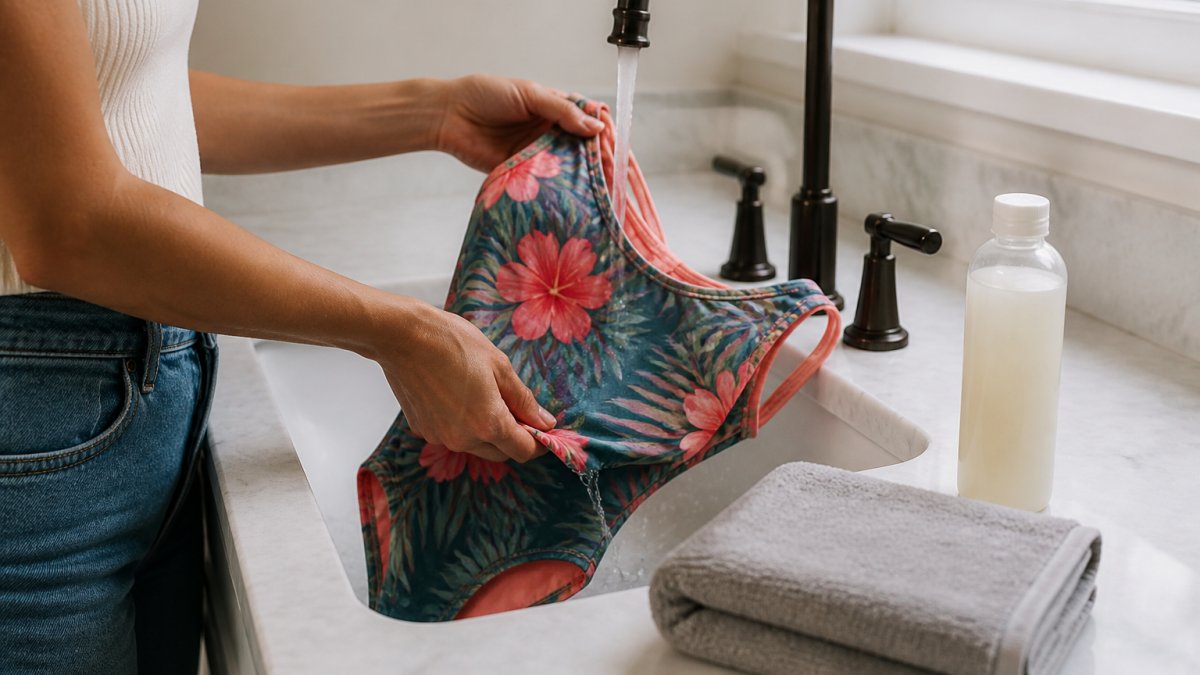
A Complete Care Routine, Step by Step
Follow this routine after every swim:
- Rinse within 30 minutes. Cool water, not hot. Hot water speeds up elastic breakdown. If you cannot rinse immediately, at least soak the suit in a sink or a bag of fresh water before it dries.
- Hand wash with a mild soap. A drop of gentle hand soap or a dedicated swimwear wash is enough. Skip bleach, fabric softener, and harsh detergents, they strip elasticity and color.
- Gently squeeze, never wring. Twisting stretches the knit and breaks down spandex fibers. Press the water out between your palms or roll the suit in a towel.
- Lay flat or hang to air dry in the shade. Direct sun fades color and weakens elastic. A shaded balcony, a bathroom hook, or a drying rack works well.
- Store dry and flat. Once fully dry, fold the suit loosely. Do not leave it compressed in a drawer for months, and never store it damp.
What to avoid:
- Hot dryers and hot tubs. Heat is the fastest way to kill spandex.
- Balling a wet suit in a bag. Damp fabric and trapped heat speed up elastic breakdown.
- Rough surfaces. Pool decks, concrete, and rough rocks snag knits and pull threads.
Our Tie Dye Custom Bikini Swimsuit uses an advanced heat sublimation print that resists fading in water, but even a tough suit lasts longer with a simple rinse. The American Cleaning Institute's fabric care resources back up the basics: cool water, gentle handling, and air drying protect stretch fabrics.

Cost Per Wear: The Value Test Most Shoppers Skip
A cheap suit replaced every few months usually costs more than a durable one worn for years.
- A $30 suit worn twice a week for one season (about 100 wears) costs roughly $0.30 per wear.
- A $90 suit worn twice a week for three seasons (about 300 wears) costs roughly $0.30 per wear, and you replace it far less often.
That is the trade-off: upfront price versus replacement frequency. A suit that fades in weeks is not a bargain if you buy four of them a year.
To estimate your own cost per wear:
- Count how often you swim per week.
- Multiply by the number of weeks in your swim season.
- Divide the suit's price by that number.
- Compare that figure across the suits you are considering.
The suit with the lowest cost per wear is usually the one built from the right fabric and cared for properly, not the cheapest one on the rack.
Signs a Swimsuit Is Wearing Out and When to Replace It
A swimsuit is wearing out when the fabric stays stretched, the color has faded, or the elastic feels loose. Those are your signals to replace it, not just style changes.
Watch for these signs:
- Fabric that sags and no longer snaps back
- Faded or blotchy color, even after rinsing
- Thin, see-through spots or pilling
Think about cost per wear. A durable suit worn twice a week for two seasons delivers far more value than a cheap one replaced every few months. Buying fewer, better suits usually costs less over time.
Conclusion: Buying Fewer, Better Swimsuits
Choosing long lasting swimwear is mostly about discipline: read the label, match the fabric to your swim style, and rinse after every use. Do those three things and you will replace suits far less often.
South Bay Gear has been making simple, classic beach wear since 1960, built for people who love the sun, sand, and sea. Our swimwear and beach shorts use durable polyester blends made to hold up season after season.
Frequently Asked Questions
Which fabric is best for long lasting swimwear?
Polyester blends hold up best for most swimmers. A suit like the South Bay Tie-Dye Floral Pattern Ladies One Piece Swimsuit, made from 86% polyester and 14% spandex, keeps its stretch and color longer than nylon, which breaks down faster in chlorinated water. Look for a polyester-spandex blend with at least 80% polyester if you swim regularly. For occasional beach use, nylon blends feel softer but need gentler care.
How can I make my swimsuit last longer?
Rinse it in cool water immediately after every swim, before the chlorine or salt dries into the fibers. Hand wash with mild soap, skip the dryer, and air dry in the shade since direct sun fades color and weakens elastic. Rotate between two suits so each one fully dries between wears. Following the care instructions on your suit, like the cold-water, non-chlorine guidance on South Bay Gear's bikini and board shorts, makes the biggest difference.
What causes swimwear to lose its elasticity?
Chlorine, hot water, and heat from dryers are the main culprits. Chlorinated water gradually breaks down spandex fibers, so a suit worn daily in a pool can go slack within a few months. Sunscreen oils and body lotions also degrade elastic if they sit in the fabric. Rinsing right after swimming and air drying away from direct heat keeps the stretch intact far longer.
Are polyester swimsuits more durable than nylon?
Yes, in most cases. Polyester resists chlorine, fading, and stretching better than nylon, which is why swimwear built for frequent pool use leans on polyester blends. The men's board shorts and one-piece swimsuit at South Bay Gear use polyester blends for exactly this reason. Nylon feels softer and dries quickly, but it tends to lose shape sooner, especially with regular exposure to chlorinated water.
The hardest part of buying swimwear is resisting the cheap suit that looks good today and fades by next month. South Bay Gear offers durable, classic beach wear with polyester-rich fabrics, free shipping on select items, and a heritage built on the coast since 1960. Shop all and choose a suit made to last.
0 comments