Table of Contents
- Why Proper Swim Gear Care Matters
- Rinse Your Swimwear Immediately After Swimming
- How to Hand Wash a Swimsuit
- How to Wash Swimwear in a Washing Machine
- How to Remove Chlorine from Swimwear
- How to Dry a Swimsuit Without Stretching
- Common Mistakes to Avoid When Washing Swim Gear
- Caring for Different Swim Gear Beyond Swimsuits
- Frequently Asked Questions
Last Updated: October 11, 2026
Why Proper Swim Gear Care Matters
Learning how to wash swim gear properly extends the life of your swimwear and keeps it looking great. Chlorine, saltwater, sunscreen, and body oils break down fabric elasticity and fade colors over time. When you rinse and wash your swimwear correctly, you protect the investment you've made in quality pieces.
South Bay Gear has been crafting durable swimwear since 1960, and proper care is essential to maintaining the shape, color, and stretch that makes our pieces last season after season. The fabrics in quality swimwear, polyester and spandex blends, need gentle handling to stay in top condition. Harsh washing methods, hot water, and chlorine exposure without rinsing accelerate wear.

This guide covers everything you need to know about caring for swim gear properly, from immediate post-swim rinsing to drying techniques that prevent stretching. We'll walk through hand washing, machine washing, chlorine removal, and common mistakes that damage swimwear.
Rinse Your Swimwear Immediately After Swimming
Rinsing your swimwear immediately after swimming is the single most important step in how to wash swim gear properly. Fresh water rinses away chlorine, saltwater, sunscreen residue, and body oils that sit on fabric fibers and cause damage.
As soon as you leave the pool or ocean, find a sink or shower and rinse your swimsuit thoroughly with cool water. Hold the fabric under running water and gently squeeze the water through. Don't wring or twist, just let the cool water flush out chemicals and salt.
Most swimmers skip this step or delay it, which is a mistake. Chlorine left on fabric breaks down spandex and causes fading (The Impact of Chlorinated Water and Sun Exposure on the Durability and Performance of...). Saltwater crystallizes on fibers and weakens elasticity.
Quick rinse checklist:
- Rinse immediately after leaving the water
- Use cool or cold water only
- Squeeze gently, don't wring
- Focus on areas with heavy sunscreen or oil buildup
- Rinse until water runs clear
How to Hand Wash a Swimsuit
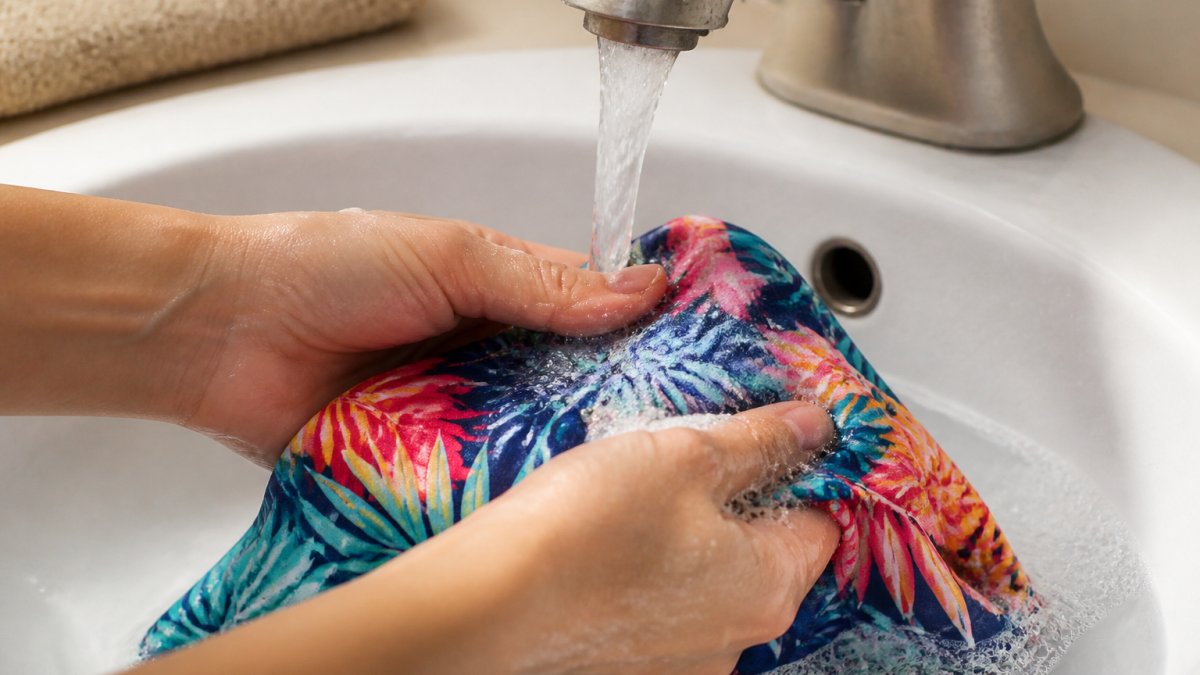
Hand washing is the gentlest method for swim gear and the best choice for delicate or printed swimwear. When you hand wash, you control the agitation and water temperature, which protects fabric integrity.
Fill a sink or basin with cool water, never hot. Add a small amount of mild detergent designed for delicates or swimwear. Submerge your swimsuit and let it soak for 15-20 minutes.
After soaking, gently squeeze the soapy water through the fabric. Pay extra attention to areas that hold moisture: the leg openings, waistband, and underarm seams.
Drain the soapy water and rinse thoroughly with cool water. Squeeze gently as you rinse, you may need to rinse 2-3 times until the water runs completely clear. Any soap residue left behind will trap moisture and cause odor.
Hand washing steps:
- Fill sink with cool water (below 40°C or 104°F)
- Add mild detergent, just a small amount
- Soak swimwear for 15-20 minutes
- Gently squeeze soapy water through fabric
- Drain and rinse 2-3 times with cool water
- Squeeze gently to remove excess water
Our South Bay Print Custom Bikini Swimsuit and South Bay Tie-Dye Floral Pattern Ladies One Piece Swimsuit both benefit from hand washing to preserve the vibrant prints and fabric stretch.

How to Wash Swimwear in a Washing Machine
Machine washing is faster than hand washing, but it requires the right settings to protect your swimwear. Most damage from machine washing comes from high water temperatures, aggressive spin cycles, and friction against other clothes.
Use the delicate or gentle cycle on your washing machine. Select cold water only, never warm or hot. Add a mesh laundry bag to your swimsuit before washing.
Use only non-chlorine, mild detergent. Avoid fabric softener, bleach, and regular laundry detergent, which are too harsh. Add less detergent than you normally would, a small amount goes a long way in cold water.
Set the spin speed to low or off if your machine allows it. High spin speeds wring moisture out aggressively and can stretch or damage elastic fibers. After the cycle completes, remove your swimsuit promptly to prevent mildew growth.
Machine washing settings:
- Cycle: Delicate or gentle
- Water temperature: Cold (max 40°C or 104°F)
- Detergent: Non-chlorine, mild formula only
- Spin speed: Low or off
- Use a mesh laundry bag for protection
The Big Boys' Sharky Swimming Trunks and Watercolor Flowers Men's Mid-Length Beach Shorts are machine washable when you follow these gentle settings.

How to Remove Chlorine from Swimwear
Chlorine is the primary enemy of swimwear longevity. Even after rinsing, chlorine residue can remain trapped in fabric fibers and continue breaking down spandex and fading colors. If you swim frequently, extra chlorine removal steps help extend garment life.
The most effective chlorine removal method is soaking in fresh water for an extended period. After your initial rinse, fill a basin with cool water and soak your swimwear for 30 minutes to an hour. This allows dissolved chlorine to leach out of the fabric.
Some swimmers add a small amount of white vinegar to the soak water, about one tablespoon per gallon. Vinegar helps neutralize chlorine, though the effect is mild. The vinegar smell will rinse away. This method works best for frequent swimmers or for swimwear that has absorbed heavy chlorine exposure.
South Bay Print Custom Bikini Swimsuit Free Shipping →
Never use hot water for chlorine removal, as heat can set chlorine damage into the fabric. Always use cool water and allow time for soaking rather than trying to speed up the process.
Chlorine removal steps:
- Rinse immediately with cool water after swimming
- Soak in fresh cool water for 30-60 minutes
- For heavy chlorine exposure, repeat the soak 2-3 times
- Optional: add one tablespoon white vinegar per gallon of soak water
- Never use hot water
How to Dry a Swimsuit Without Stretching
How you dry your swimwear is just as important as how you wash it. Heat and improper drying techniques stretch elastic fibers and damage fabric. Air drying is the only safe method for swimwear.
After washing, gently squeeze out excess water, don't wring or twist. Lay your swimsuit flat on a clean, dry towel in a shaded area. Lay it as close to its original shape as possible. The flat-drying method prevents stretching and allows even moisture evaporation.
Never hang swimwear to dry, as the weight of the wet fabric will stretch elastic and distort the shape. Never use a dryer or expose swimwear to direct sunlight or heat, which fades colors and weakens spandex. Shade is essential, UV rays damage fabric fibers and accelerate color fading.
Allow 24-48 hours for complete drying, depending on humidity. Once dry, fold and store in a cool, dark place. Never store damp swimwear, as moisture promotes mildew and odor.
Air-drying checklist:
- Squeeze gently to remove excess water
- Lay flat on a clean, dry towel
- Arrange in original shape
- Place in a shaded area away from direct sunlight
- Allow 24-48 hours to dry completely
- Never hang, wring, or use heat
Common Mistakes to Avoid When Washing Swim Gear
Most damage to swimwear comes from washing mistakes that seem harmless but accumulate over time. Knowing what NOT to do is as important as knowing the correct process.
The biggest mistake is using hot water. Hot water opens fabric fibers and allows chlorine and chemicals to penetrate deeper. It also accelerates spandex breakdown. Always use cool water, no exceptions.
Never use regular laundry detergent, fabric softener, or bleach. These products are too harsh and leave residue that traps moisture and causes odor. Fabric softener coats fibers and reduces elasticity. Bleach weakens fabric and fades colors permanently.
Wringing and twisting swimwear is another common error. This stretches elastic and distorts the shape. Always squeeze gently, treat your swimsuit like you're squeezing water from a sponge, not wringing out a dishcloth.
Storing damp swimwear in a closed bag or drawer creates mildew and odor. Always ensure swimwear is completely dry before storage. Never fold and store while damp.
| Mistake | Why It Damages Swimwear | What to Do Instead |
|---|---|---|
| Hot water | Opens fibers, accelerates spandex breakdown | Use cool water only |
| Regular detergent | Too harsh, leaves residue | Use mild, non-chlorine detergent |
| Wringing or twisting | Stretches elastic and distorts shape | Squeeze gently only |
| Machine drying | Heat damages spandex and fades colors | Air dry flat in shade |
| Hanging to dry | Weight stretches elastic | Lay flat on towel |
| Storing while damp | Promotes mildew and odor | Dry completely first |
Caring for Different Swim Gear Beyond Swimsuits
Proper care extends beyond swimsuits to rash guards, swim trunks, cover-ups, and other swim gear. While the basic principles remain the same, some gear has specific needs.
Rash guards made from nylon and spandex follow the same washing rules as swimsuits: cool water, mild detergent, gentle cycle or hand washing, and air drying.
Swim trunks with mesh linings need special attention. Rinse the mesh thoroughly to remove chlorine and salt. When machine washing, the mesh lining can snag, so use a mesh bag for protection.
Board shorts and longer swim trunks made from heavier polyester can tolerate slightly warmer water (up to 40°C or 104°F) but still benefit from gentle cycles and air drying. Never machine dry any swim gear, regardless of fabric weight.
Cover-ups and beach shirts should be washed separately from swimwear if they contain different fabrics. Follow care label instructions, but assume cool water and gentle cycles are safest. Air dry to preserve elasticity and prevent shrinking.
Swim gear care summary:
- Rash guards: hand wash or delicate cycle, air dry 12-24 hours
- Swim trunks: use mesh bag, delicate cycle, air dry 24-48 hours
- Board shorts: gentle cycle, cool water, air dry flat
- Cover-ups: check care label, air dry to prevent shrinking
- All gear: rinse immediately after swimming, use cool water always
Proper care for your swim gear doesn't require special products or complicated steps. At South Bay Gear, we design our swimwear to last, and following these care methods ensures your pieces stay vibrant and comfortable season after season. Start with our South Bay Print Custom Bikini Swimsuit or Big Boys' Sharky Swimming Trunks, and you'll see how quality fabric responds to proper care. Shop all our swim gear collection and experience the difference that thoughtful design and proper maintenance make.
Frequently Asked Questions
Should you rinse swimwear after every swim?
Yes, rinsing immediately after swimming is one of the most important steps in caring for swim gear. Chlorine, saltwater, sunscreen, and body oils break down fabric fibers and cause color fading and elasticity loss. A quick rinse with fresh cool water removes these damaging substances and extends your swimwear's lifespan significantly. Make this part of your routine every time you leave the pool or ocean.
How to wash chlorine out of swimwear?
Start by rinsing thoroughly with cool water immediately after swimming to remove surface chlorine. For deeper cleaning, hand wash or machine wash using mild detergent in cold water (max 40°C or 104°F). Soak the swimwear in cool water with a small amount of mild detergent for 15-30 minutes before washing. This allows the detergent to break down chlorine residue trapped in the fabric. Always use non-chlorine detergent and avoid fabric softener, which can damage spandex and reduce elasticity.
Can you wash swim caps and goggles with your swimsuit?
Swim caps and goggles can be washed with your swimsuit using the same gentle methods. Rinse them with cool water immediately after use. Hand wash caps and goggles in mild detergent and cool water, or place them in a mesh laundry bag for machine washing on a delicate cycle. Avoid wringing or twisting goggles, as this can damage seals and straps. Air dry all items flat or hanging, away from direct sunlight and heat.
How should you dry a swimsuit without stretching it?
Air dry your swimsuit flat on a towel or hanging on a clothesline, away from direct sunlight and heat sources. Never wring or twist the fabric, as this causes permanent stretching and damage. If using a towel, roll the swimsuit gently to remove excess water before laying it flat. Avoid machine drying entirely, as heat breaks down spandex and polyester fibers. Allow 24-48 hours for complete drying in a shaded, well-ventilated area to preserve shape and elasticity.
0 comments