Quick Summary
Classic coastal style swimwear for adults means clean lines, modest but confident coverage, and matte fabrics in colors or prints that look good in sunlight. It draws on mid-century beach culture without feeling like a costume. Fit and fabric matter as much as the look.
- One-piece suits offer the most coverage and the cleanest line for swimming and lounging.
- Check torso length, bust support, waist, and leg openings before deciding on style.
- Test the fit wet when possible, since fabric relaxes and can lose support once soaked.
- Rinse swimwear in cool fresh water after each swim and dry it flat in shade.
- Buy one suit for swimming and one for lounging to prioritize support or coverage.
Table of Contents
- What Defines Classic Coastal Style Swimwear
- Timeless Swimsuit Styles: One-Piece, Bikini, and Vintage-Inspired Cuts
- High-Waisted Swimsuits for Adults: Fit, Flattery, and Comfort
- Flattering Swimsuits with Coverage for Every Body Shape
- Fabric, Construction, and Durability for Full Beach Days
- Coastal Colors, Prints, and Swimsuit Cover-Ups for Adults
- Choosing Your Next Classic Coastal Piece at South Bay Gear
- Frequently Asked Questions
Classic coastal style swimwear for adults is a category that keeps coming back, and for good reason. The shapes are flattering, the fabrics hold up, and the look works from a boardwalk to a beach picnic. At South Bay Gear, we know how much a well-chosen swimsuit can change the way a grown-up feels on a summer day.
Here is the short answer to the question most shoppers ask first: classic coastal style swimwear for adults means simple lines, modest but confident coverage, and colors or prints that look good in sunlight. It draws from mid-century beach culture without feeling like a costume. The rest of this guide walks through the styles, fits, fabrics and colors that make the look work for adults, along with the trade-offs to weigh before you buy.
What Defines Classic Coastal Style Swimwear
Classic coastal style is less about a single silhouette than a set of habits. Fabrics are matte or lightly sheened rather than high-gloss. Necklines are clean. Prints tend toward stripes, florals or small repeating patterns rather than loud logos. The overall effect is relaxed and put together at the same time.
A common mistake is treating "classic" as a synonym for "old-fashioned." The best classic pieces look current because they skip the trends that date quickly, such as extreme cutouts or overly bright neon. When you shop, ask whether a suit would still look right in five years. If it would, you're likely looking at the real thing.
Timeless Swimsuit Styles: One-Piece, Bikini, and Vintage-Inspired Cuts
The three main families each serve a different purpose.
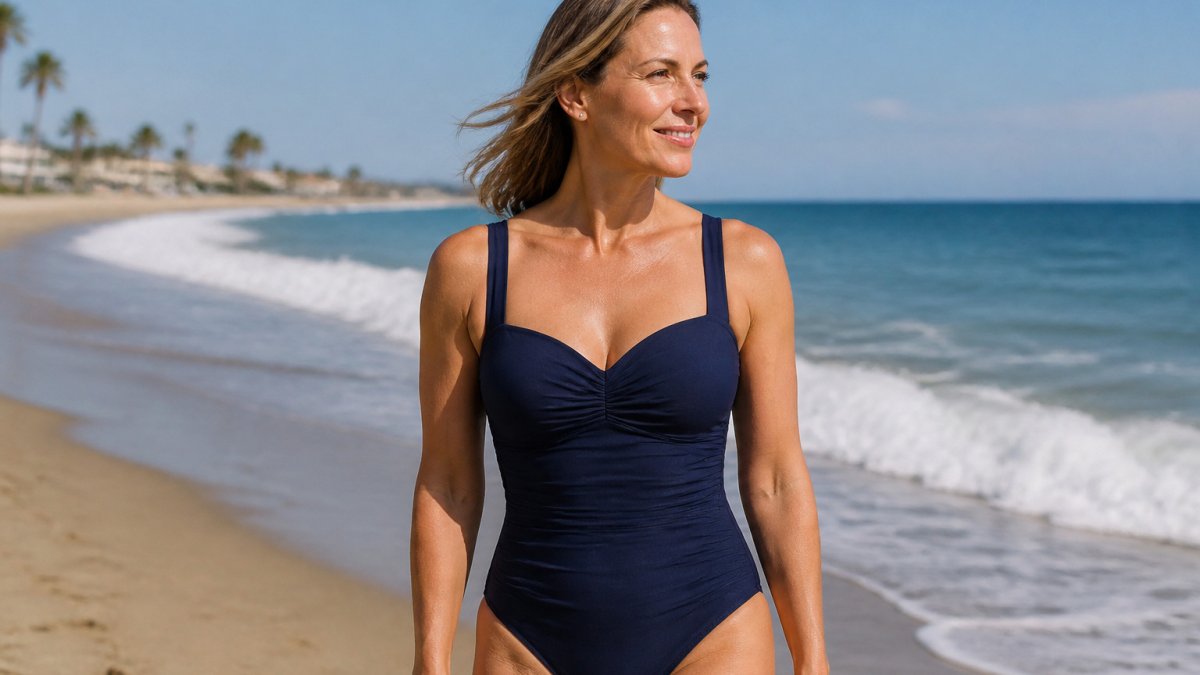
- One-piece suits offer the most coverage and the cleanest line. They suit swimming laps, lounging by the pool, and anyone who wants a single, simplified piece.
- Bikinis give more freedom of movement and tan lines of your choosing, and modern classic versions use full-coverage bottoms with a structured top.
- Vintage-inspired cuts borrow from the 1940s and 1950s, with sweetheart necklines, ruching, and higher-cut legs.
We recommend starting with the cut you'd wear most often rather than the one that looks best on a hanger. Most adults end up in a one-piece for daily swimming and keep a vintage-inspired bikini for special days.
Pin-Up and 1950s-Inspired Silhouettes
The pin-up look is the most recognizable piece of classic coastal style. Think of a fitted bodice, a defined waist, and a skirted or high-rise bottom. These silhouettes work especially well for adults who want a playful, retro feel without anything too revealing. Polka dots and small florals are the classic prints here. If you are new to the look, start with a solid color in this cut and add a print once you're comfortable.
High-Waisted Swimsuits for Adults: Fit, Flattery, and Comfort
High-waisted bottoms are one of the most practical choices for adults. They sit at or above the natural waist, offer more coverage through the midsection, and pair well with both one-piece and two-piece tops. Many women find that the waistband smooths the line through the torso, which is part of why the style has stayed popular.
Fit matters more than the label. When trying on a high-waisted suit, check that the waistband sits flat without digging in, that the leg openings lie smooth, and that you can sit down and move without the fabric riding up. A slightly looser fit often moves better in the water. If you're between sizes, consider the fabric's stretch recovery before deciding.
Flattering Swimsuits with Coverage for Every Body Shape
Most swimwear advice stops at body-shape labels. A more useful approach for adults is to think in terms of fit mechanics: where a suit anchors, how it distributes tension, and how much coverage you want in each zone. The right suit is the one you can move in comfortably, not the one that matches a label.
Start with four fit checkpoints before you worry about style:
- Torso length. If a one-piece pulls down at the shoulders or rides up at the leg, the torso is likely too short. Look for suits with adjustable straps, a higher neckline, or a longer torso option. If it bunches at the waist, the torso may be too long.
- Bust support. Support comes from the band under the bust, not the straps. A firm underbust band, molded cups, or a built-in shelf bra will do more for comfort than a halter tie. Adjustable straps should let you tighten without digging into the shoulders.
- Waist and midsection. Ruching, side panels, and higher-rise bottoms skim rather than squeeze. If a waistband rolls, it is usually too loose or too narrow; a wider band distributes pressure better.
- Leg openings and seat coverage. Check that the leg elastic lies flat when you sit and that the seat does not pull. Full-coverage bottoms and skirted styles reduce adjustment mid-day.
With those checkpoints in mind, here is how common fit goals map to practical choices:
- More midsection coverage: high-waisted bottoms, tankinis, swim dresses, and one-pieces with ruching or side gathering.
- More bust support: underwire or molded-cup tops, wide underbust bands, and adjustable straps; halter necks help with lift but can strain the neck over a long day.
- Longer torso: look for tall-torso one-pieces, adjustable straps, or two-piece sets that let you size the top and bottom separately.
- Shorter torso: higher-leg cuts and bandeau or straight-neck tops can balance proportions without extra fabric.
- Broader shoulders: V-necks and wider straps draw the eye inward; avoid thin spaghetti straps that can dig in.
- Fuller hips: structured tops and darker bottoms with side detail balance the silhouette; high-cut legs can elongate the leg line.
Coverage is a dial, not a verdict. Tankinis, swim dresses, rash guards, and full-coverage bottoms let you set modesty and sun protection independently from style. For adults who want less sun exposure, a long-sleeve rash guard over a classic one-piece keeps the coastal look while adding coverage. You can compare comfortable swimwear picks for active seniors with built-in coverage.
A common pattern among adult shoppers is to buy one suit for swimming and one for lounging. That split lets you prioritize support and durability for the pool suit and coverage and style for the beach suit, rather than asking one piece to do everything.
Fabric, Construction, and Durability for Full Beach Days
Fabric and construction decide whether a suit survives a season or five. The label tells you more than the look on the hanger, so read it before you buy.
Fiber blends. Swimwear is often made from a blend of nylon or polyester with elastane (spandex), which provides stretch and recovery. A higher elastane share generally means more stretch, but recovery depends on construction as much as percentage.
Lining. A full front lining can add opacity when wet and reduce show-through in light colors.
Construction details. Check the stitching at stress points, straps, underbust, and leg openings.
Performance factors. Chlorine and UV exposure can wear fabrics over time, so rinsing after each swim helps. Some fabrics carry a UPF rating, which indicates how much UV radiation passes through the fabric.
Care that extends life. Rinse in cool fresh water immediately after swimming, hand wash with a mild detergent, and skip the washer's spin cycle. Wringing and high heat break down elastic. Dry flat in shade; direct sun and hanging by thin straps can stretch the suit out of shape.
Trade-offs to weigh. Higher elastane and full lining improve fit and opacity but can feel warmer and take longer to dry. Chlorine-resistant polyester lasts longer in pools but may feel less soft than nylon. Quick-dry, lightweight fabrics suit travel but may offer less support. Match the fabric to how you will actually use the suit, and the classic look will hold up season after season. For a closer look at construction for long days in the water, see durable swimwear for active water.
The table below summarises the fabric and care points covered in this section, so you can check them quickly before you buy.
| Factor | What to look for | Why it matters |
|---|---|---|
| Fiber blend | Nylon or polyester with elastane | Provides stretch and recovery |
| Chlorine use | Chlorine-resistant fabric | Helps the suit last in pools |
| Lining | Full front lining | Adds opacity when wet |
| Stress points | Straps, underbust, leg openings | Shows how well the suit is built |
| Sun protection | Stated UPF rating | Indicates UV protection |
| After swimming | Rinse in cool fresh water | Removes chlorine and salt |
| Drying | Dry flat in shade | Avoids stretching the suit |
Coastal Colors, Prints, and Swimsuit Cover-Ups for Adults
The coastal palette is easy to build around: navy, white, sand, seafoam, coral and faded denim. Stripes, small florals and classic polka dots all sit comfortably within that range. Black and white is a timeless choice for adults who want a more understated look.
Cover-ups finish the outfit. A lightweight linen or cotton shirt, a long kaftan, or a simple wrap skirt works over almost any suit and makes the transition from beach to lunch seamless. Pair a navy one-piece with a white cover-up and a straw hat for a look that works from a morning walk to an afternoon on the boardwalk.
Choosing Your Next Classic Coastal Piece at South Bay Gear
Once you know the cut, fit and fabric you want, the choice comes down to where you buy. Our South Bay Gear collection focuses on classic beachwear, including swimwear designed for a simple, coastal lifestyle, along with hats, caps and visors to complete the look. Pair your suit with a South Bay map-style sports visor.
For current pricing on any item, check the product pages directly or request a quote from South Bay Gear. Free shipping applies to select items.
If you are weighing a classic one-piece, a vintage-inspired bikini or a high-waisted suit with coverage, start with the fit guidance above and then try the cut you'd most likely wear each week. A good classic piece should feel like something you already own after the first summer.
Last Updated: November 1, 2026
Frequently Asked Questions
What makes swimwear style classic and coastal?
Classic coastal swimwear relies on simple silhouettes, clean lines, and restrained details such as solid colors, stripes, or small prints. Vintage-inspired shapes like sweetheart necklines, fitted waistlines, and modest leg openings give the look its retro character, while fabrics that hold color and shape keep it wearable on everyday beach days. The style favors comfort and timelessness over trend-driven cutouts or embellishment.
Are high-waisted swimsuits flattering for adults?
High-waisted swimsuits can be flattering for many adults because the higher waistline draws the eye upward and offers more coverage through the midsection. Fit matters most: the waistband should sit comfortably without digging in, and the leg openings should lie flat against the skin. Trying a few cuts in different fabrics helps you find the proportions that suit your frame best.
How can I find swimwear with more coverage without sacrificing style?
Look for one-piece styles with lined bodices, tankini tops paired with hipster or high-waisted bottoms, and cuts with小 added structure such as ruching or panels. Classic silhouettes like a modest V-neck or a retro halter often provide more coverage while keeping a polished look. Check the fabric weight and lining before buying, since thin or sheer materials can reduce both coverage and comfort.
What should adults wear over a swimsuit at the beach?
A lightweight cover-up is the most versatile choice, such as a linen-blend caftan, a loose shirt, or a sarong worn over the swimsuit for walking to and from the water. Choose breathable fabrics that dry quickly so they do not hold sand or moisture. A cover-up also adds coverage for those who prefer it while maintaining the relaxed coastal feel.

0 comments