Table of Contents
- Why Your Swim Hat Keeps Slipping (and What Actually Causes It)
- What You'll Need Before You Start
- Step 1: How to Put On a Swim Cap Correctly
- Step 2: Prep Your Hair So the Cap Has Something to Grip
- Step 3: Silicone vs Latex Swim Caps for Staying Power
- Step 4: Best Swim Caps for Long Hair and Thick Hair
- Common Mistakes That Make a Swim Hat Slip
- Quick Fixes Poolside When Your Cap Starts Riding Up
- Frequently Asked Questions
Last Updated: September 13, 2026
Why Your Swim Hat Keeps Slipping (and What Actually Causes It)
A swim cap that rides up mid-lap almost never fails because of the cap alone. It slips because something between your hair and the silicone is doing the opposite of gripping. The fix is almost always in the prep, not the product. Learning how to stop swim hat slipping starts with understanding the two forces working against you.
Hair Products, Oils, and Lotion Residue
Conditioner, leave-in treatments, and sunscreen create a slick film that silicone cannot grip. Even a light coating of coconut oil turns a snug cap into a sliding shell. The cap isn't defective; it's lubricated. Rinse hair with plain water before you cap up, and skip heavy products on swim days. If you must moisturize, do it after your swim.
Wrong Size, Wrong Shape, Wrong Material
A cap that's too large wrinkles at the crown, and wrinkles become channels for water and movement. Too small, and it stretches so thin it loses tension. Latex grips dry hair well but pulls. Silicone holds better over wet hair and lasts longer. The USA Swimming guide to competitive equipment notes that proper fit matters as much as material for staying power.
What You'll Need Before You Start
Gather these before you touch your hair:
- A silicone or latex cap sized to your head circumference
- A wide-tooth comb or soft brush
- A small spray bottle of plain water
- A microfiber towel
- Optional: a thin swim headband for extra grip under the cap
Nothing here is expensive, and most swimmers already own half of it. The comb matters more than people expect: tangles create bumps, and bumps create lift.
Step 1: How to Put On a Swim Cap Correctly
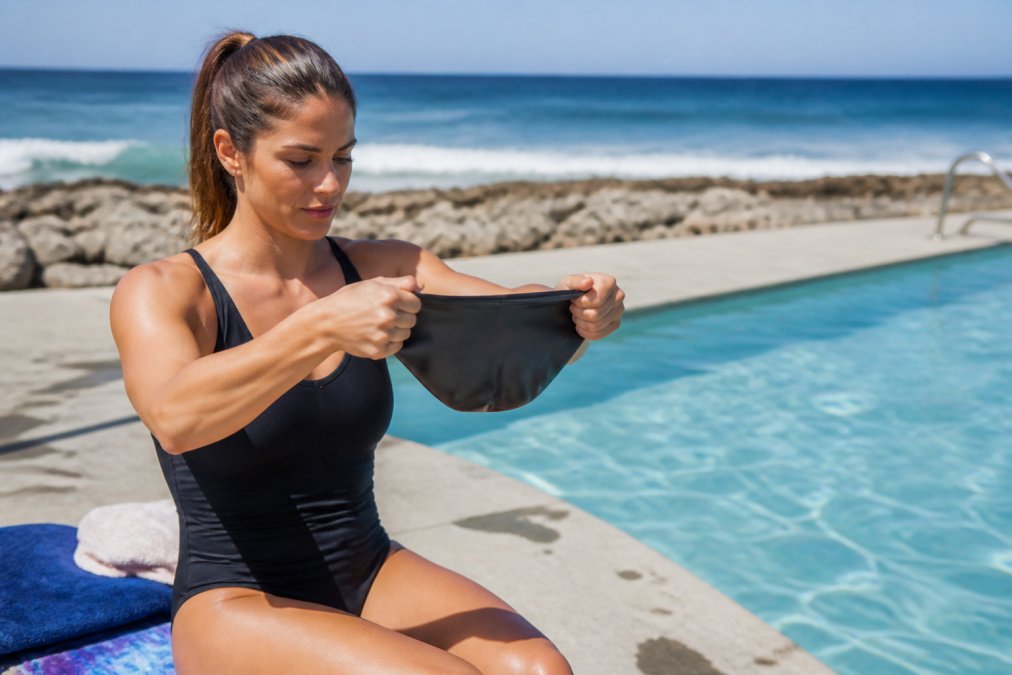
The correct technique is to stretch the cap wide with both hands, seat the front edge at your forehead, and roll it back over your crown. Never pull straight down; that traps air and folds the rim.
The Two-Hand Stretch Method
Slide both hands inside the cap, palms facing out, and stretch it until your fingertips nearly touch. Lower your chin, place the front edge just above your eyebrows, then release and roll the back down. Tuck stray hair with your thumbs as you go.
Where the Seam Should Sit
On seamed caps, the seam runs front to back over the crown. If it sits sideways, the cap twists and lifts on one side. Center the seam and the rim stays level.
Step 2: Prep Your Hair So the Cap Has Something to Grip
Dry, product-free hair gives silicone the best traction. Wet hair works too, but only if it's plain water, not conditioner. For long hair, braid it flat against the scalp or twist it into a low bun before capping. Loose ponytails create a lump that pushes the cap up within a few laps.
A common mistake is soaking hair in leave-in conditioner "to protect it." That protection is exactly what makes a cap slide. Rinse, comb flat, and cap.
Step 3: Silicone vs Latex Swim Caps for Staying Power
Silicone wins on grip and durability; latex wins on price and stretch. Silicone caps resist chlorine breakdown longer and hold tension over wet hair, which is why most pool regulars switch to them. Latex feels thinner and can grip dry hair tightly, but it degrades faster and snaps more often (the CDC).
| Feature | Silicone | Latex |
|---|---|---|
| Grip on wet hair | Strong | Moderate |
| Durability | Long-lasting | Shorter lifespan |
| Feel | Thicker, snug | Thin, tight |
| Best for | Daily lap swimming | Occasional swimmers |
If your cap keeps sliding, the material is often the culprit, not your technique. The CDC guidance on healthy swimming also reminds swimmers that clean, rinse-free hair keeps gear in better condition.
Step 4: Best Swim Caps for Long Hair and Thick Hair
Long and thick hair needs a cap with extra volume at the crown and a wider rim. Look for caps labeled for long hair, which sit deeper and cover more of the head. Braiding hair flat before capping prevents the bulk from pushing the rim up. A swim headband under the cap adds a grip layer that holds everything in place.
Common Mistakes That Make a Swim Hat Slip
The same handful of errors behind swim hat slipping show up again and again. Capping over conditioner is the biggest one. Wearing a cap that's a size too big is second. Pulling the cap straight down instead of rolling it seats it unevenly. Skipping the flat braid for long hair adds bulk. And reusing a cap with a stretched, wavy rim guarantees lift. Fix these and most slipping stops.
Quick Fixes Poolside When Your Cap Starts Riding Up
When a cap lifts mid-swim, stop at the wall, not mid-lane. Tuck the front rim back down with both thumbs, press the sides flat, and reseat the seam. If it keeps rising, step out, dry your hairline with a towel, and re-cap. A spare cap in your bag solves the problem permanently.
That's the practical side. The gear side matters too, and it's where South Bay Gear comes in. Browse the collection and find gear that stays put.
Frequently Asked Questions
Why does my swim cap keep sliding off?
The usual culprits are residue and fit. Conditioner, leave-in sprays, and body lotion leave a slick film that silicone and latex cannot grip, so the cap creeps up within a few laps. A cap that is too small or too large also slides because it cannot seat evenly around your hairline. Rinse your hair with plain water before putting the cap on, and check that the edge sits just above your eyebrows and covers your ears.
Does hair conditioner make your swim cap slip?
Yes. Conditioner and leave-in treatments coat each strand with silicone or oils, which transfers to the inside of the cap and turns it into a slippery surface. If you need conditioner for chlorine protection, apply it after your swim instead of before. A plain water rinse before you put the cap on is enough to reduce chlorine absorption without creating the slick layer that causes swim hat slipping.
Should I wet my hair before putting on a swim cap?
Wet hair helps the cap slide on without snagging, but soaking wet hair can make the cap feel loose once you are in the water. The middle ground: dampen your hair with fresh water, squeeze out the excess, then put the cap on. This reduces chlorine uptake and gives the cap enough friction to stay in place. Dry hair is harder to cover and more likely to pull at the edges.
How tight should a swim cap be?
Snug enough that the edge stays flat against your skin with no gaps, but not so tight that it leaves deep marks or gives you a headache after 20 minutes. A correctly fitted cap should feel firm when you first put it on and relax slightly once it warms to your body temperature. If you have to tug hard to get it over your head, or it bunches at the crown, you are likely wearing the wrong size or material.
Slipping caps are frustrating, but the cause is almost always fixable: prep your hair, size the cap right, and master the roll-on technique. South Bay Gear has been outfitting South Bay swimmers since 1960 with simple, classic beach wear and swim gear made for a coastal life. Our caps and accessories pair comfort with the kind of durability that keeps you in the water, not fussing with your gear. Shop all at South Bay Gear and gear up for your next swim.
0 comments