Table of Contents
- Why Swimwear Loses Its Shape
- Step 1: Rinse Immediately After Every Swim
- Best Practices for Washing Swimsuits
- How to Remove Chlorine from Swimwear
- Drying Techniques That Protect Elasticity
- How to Store Swimsuits to Prevent Stretching
- Repairing Lost Elasticity and Travel Care
- Frequently Asked Questions
Last Updated: September 16, 2026
Why Swimwear Loses Its Shape
Chlorine, sunscreen, and stretching are the three main reasons a swimsuit struggles to maintain swimwear shape. The fabric itself is the root of the problem: most swimwear blends polyester or nylon with Lycra, spandex, or elastane, and that elastic fiber breaks down faster than the rest of the suit. Understanding the inherent limitations of these synthetic fibers is essential for effective stretch fabric maintenance, especially when considering how different weave densities influence the long-term structural integrity of high-performance garments.
Here's what happens at the fiber level. Chlorine oxidizes the elastane, saltwater crystals abrade it, and UV exposure weakens the bonds that let the fabric snap back. Add sunscreen oils, hot tub heat, and the twist of wringing, and you get fiber breakdown that no washing machine can reverse.
The good news: a few consistent habits protect fabric integrity for years, not months.
Step 1: Rinse Immediately After Every Swim
Rinsing within 30 minutes of leaving the water is the single highest-impact habit for how to maintain swimwear shape 2026. Cold tap water flushes out chlorine and salt before they can bond with the fibers.
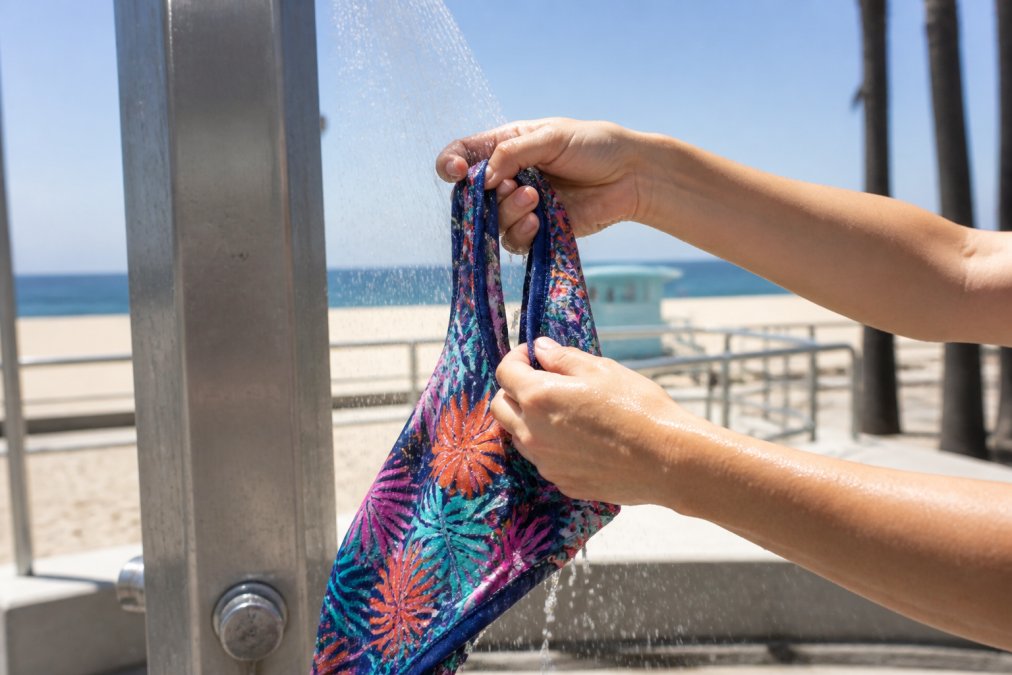
Total Time: 2 minutes Difficulty: Beginner
- Rinse with cool water within 30 minutes of swimming
- Avoid hot water, which sets chlorine residue deeper
- Squeeze, never twist, to remove excess water
Best Practices for Washing Swimsuits
Hand washing in cold water with a pH-neutral detergent is the safest method for best practices for washing swimsuits. Reserve the machine for occasional deep cleans, and only with the right settings.
Hand Washing vs. Machine Washing
Hand washing wins for anything with Lycra or spandex, because a machine's agitation stretches fibers past their recovery point. If you must machine wash, use a mesh laundry bag, a gentle cycle, and cold water only.
| Method | Water Temp | Agitation | Best For |
|---|---|---|---|
| Hand wash | Cold | None | Elastane-rich suits |
| Machine (mesh bag) | Cold | Gentle cycle | Sturdy polyester suits |
| Machine (standard) | Any | High | Not recommended |
Choosing the Right Detergent
A pH-neutral detergent protects elastane that harsh alkaline formulas degrade. Avoid bleach, fabric softener, and enzyme-heavy powders, all of which leave residue that traps oils and dulls color.
How to Remove Chlorine from Swimwear
Removing chlorine from swimwear means rinsing immediately, then soaking in cool water with a gentle detergent for 15 minutes if the suit sat wet for a while. Chlorine is the fastest killer of elasticity, so this step isn't optional.
CDC guidance on healthy swimming and pool chemicals
Drying Techniques That Protect Elasticity
The best way to dry swimwear is to lay it flat on a towel in a shaded area, away from direct sunlight. Air-dry is the only method that preserves shape retention long-term.
- Lay flat on a clean towel, reshaping the suit to its original form
- Roll the towel to press out excess water, then unroll
- Dry in a well-ventilated, shaded spot
- Never use a dryer; heat destroys elastane
How to Store Swimsuits to Prevent Stretching
Store swimsuits flat or loosely folded in a drawer, never hung by the straps. This is the core of how to store swimsuits to prevent stretching, and it's the step most people skip.
South Bay Tie-Dye Floral Pattern Ladies →
The Storage Conditions That Actually Matter
- Bone-dry, always. Even slightly damp fabric traps moisture against elastane and promotes mildew. Mildew doesn't just smell, the enzymes it produces can degrade polyurethane, which is the same chemistry that makes elastane stretchy.
- Cool and dark. UV exposure breaks down spandex even indoors if a drawer sits in direct sun. A closed drawer or opaque bin beats an open shelf near a window.
- Breathable over sealed. A cotton drawstring bag or a mesh pouch lets residual moisture escape. A sealed plastic zip bag traps any remaining humidity and concentrates it against the fabric.
- No sharp folds. Fold along the natural seams of the suit rather than creasing it across the middle. Sharp creases become permanent stretch marks in elastane and are the first spots to sag.
Rotation Is a Storage Strategy
If you swim more than twice a week, rotate between two or three suits. Elastane needs roughly 24 hours to fully recover its original dimensions after a wear cycle. Wearing the same suit two days in a row means the second wear starts from a partially stretched baseline, and that deficit compounds over a season.
Long-Term Storage (Off-Season)
For suits you won't wear for months, wash them first, residual sunscreen and chlorine continue working on the fabric even when the suit is dry. Store flat in a breathable bag, and avoid vacuum-sealed storage, which compresses elastane against itself for extended periods.
Textile care guidance from the American Cleaning Institute
Repairing Lost Elasticity and Travel Care
Once elastane breaks down, you cannot fully restore it. But you can slow the decline and get more wear out of a suit that's starting to feel loose.
First Aid for a Suit That's Already Stretched
Most guides stop at prevention. Here's what to actually try when a suit has already lost its snap:
- Vinegar soak. Soak the suit in cool water with one tablespoon of white vinegar for 15 minutes, then rinse thoroughly. Vinegar is mildly acidic and can dissolve mineral and detergent buildup that makes fabric feel slack. It won't rebuild broken polymer chains, but it can restore some perceived firmness.
- Cool water rehydration. If a suit has been stored dry for months, soak it in cool water for 20 minutes before wearing. Dry elastane is stiffer and less forgiving; rehydrating it restores some flexibility.
- Heat is the enemy of recovery. Never try to 'shrink' a stretched suit with hot water or a dryer. Heat accelerates the exact oxidative breakdown that caused the stretch in the first place.
- Retire the suit for high-impact use. A stretched suit still works for lounging or light swimming, but wearing it for laps or beach volleyball will stretch it further. Demote it rather than discard it.
Travel-Specific Maintenance
Travel is where most suits get destroyed, and almost no guide addresses it. The pattern is predictable: a wet suit gets balled up in a beach bag, sits in a hot car or hotel room for hours, and the combination of heat, chlorine residue, and compression does more damage in one trip than a month of normal wear.
- Pack a dedicated wet bag. A small waterproof pouch keeps a wet suit from soaking everything else and lets you transport it without wringing. Wringing is the single most damaging thing you can do to wet elastane.
- Hotel sink washing works. Fill the sink with cool water, add a drop of pH-neutral hand soap or shampoo, swish the suit for 30 seconds, then rinse until the water runs clear. Skip the hotel's bar soap, it's alkaline and leaves residue.
- Never leave a wet suit in a hot car. Interior temperatures can exceed 140°F, which is well past the point where elastane begins to degrade. If you can't rinse immediately, at least get the suit out of the car and into shade.
- Roll, don't fold, for packing. Sharp folds in a suitcase become permanent creases in elastane. Roll the suit loosely around a soft item like a t-shirt.
- Rinse before you fly home. A suit that sits in a suitcase for a day with chlorine residue will come out smelling like a pool and feeling stiffer than it went in.
The Sunscreen Interaction Nobody Talks About
South Bay Gear's Tie-Dye Floral One Piece uses an 86% polyester, 14% spandex blend and is hand and machine washable at up to 45°C.

EPA information on sunscreens and water quality
Frequently Asked Questions
Why does swimsuit fabric lose its shape over time?
Swimsuit fabric loses shape because chlorine, saltwater, sunscreen, and heat break down the spandex or Lycra fibers that give it stretch. Repeated exposure causes fiber breakdown, so the suit stops snapping back and starts sagging. Rinsing in cold water immediately after every swim and avoiding hot tubs slows this process. Storing suits flat instead of hanging them also helps them keep their shape between wears.
Is it better to hand wash or machine wash swimwear?
Hand washing is safer for maintaining swimwear shape. Fill a sink with cold water, add a pH-neutral detergent, and gently squeeze the suit for a few minutes. If you must use a machine, place the suit in a mesh laundry bag and run a gentle cycle with cold water. Never wring or twist the fabric, because that stretches the elastic fibers and causes permanent distortion. Always air-dry flat on a towel away from direct sunlight.
How can I remove chlorine and salt from my swimsuit effectively?
Rinse your suit in cold water within 30 minutes of leaving the pool or ocean. For chlorine, soak it for 10 to 15 minutes in cold water with a capful of pH-neutral detergent, then rinse thoroughly. Saltwater needs a shorter rinse, but the sooner you do it, the better. Never use hot water, bleach, or regular laundry detergent, because these strip the fabric and speed up color fading. Air-dry flat in a shaded, well-ventilated area.
What is the best way to dry swimwear to maintain elasticity?
Lay the suit flat on a clean towel in a shaded area and let it air-dry. Avoid direct sunlight, which breaks down spandex and causes color fading. Never put swimwear in a dryer, because heat destroys elasticity and shape retention. Do not hang a wet suit by its straps, since the weight of the water stretches them out. Flip the suit once halfway through drying so both sides dry evenly without residue buildup.
0 comments