Table of Contents
- What Makes Swimwear Durable for Active Beach Days?
- Feature Comparison: Our Top Picks for Durable Swimwear
- Best Athletic Swimsuits for Surfing: Mid-Length Trunks
- UPF 50+ Swimwear for Beach Protection: Why Fabric Matters
- How to Care for Chlorine-Resistant Swimwear: Extend the Life
- Common Mistakes That Ruin Swimwear Fast
- Which Durable Swimwear Should You Pick?
- Conclusion
- Frequently Asked Questions
Last Updated: September 9, 2026
Choosing durable swimwear for active beach days comes down to more than just grabbing the brightest pair of trunks on the rack. The fabric, stitching, and how the garment handles saltwater and sun determine whether it lasts one season or five. A board short that survives constant paddling, diving, and beach volleyball is built on specific technical choices.
What Makes Swimwear Durable for Active Beach Days?
Durable swimwear is defined by three core factors: fabric composition, seam integrity, and elasticity retention. Active use means constant friction, stretching, and exposure to elements that break down lesser materials. High-performance trunks are typically 100% polyester, which resists chlorine and saltwater far better than cotton blends or cheaper nylon alternatives.
Fabric Science: Why Polyester Wins and Where It Falls Short
The durability conversation starts with polymer chemistry. Polyester is a petroleum-based synthetic fiber with a crystalline structure that resists hydrolysis, the chemical process where water molecules break down polymer chains. This makes it more resistant to chlorine and saltwater than nylon, which absorbs more water and degrades from chlorine's oxidizing effects. However, not all polyester is equal: denier and knit density determine abrasion resistance, with a 200-denier tight weave far outlasting a 75-denier fashion-grade polyester.
Nylon, while softer and more flexible, loses up to 20% of its strength when wet and is vulnerable to chlorine degradation (peer-reviewed research). This is why many pool-specific suits use polyester or PBT (polybutylene terephthalate), a polyester derivative offering better chlorine resistance and color retention. For ocean use, saltwater is less chemically aggressive than chlorinated pool water, but the abrasive action of sand and surfboard wax creates a mechanical wear problem no fabric can fully escape.
Seam Integrity: The Structural Weak Point
The seams are where most swimsuits fail first. A flatlock seam joins two pieces of fabric with edges overlapping and lying flat against the skin, distributing stress across a wider area and eliminating the raised ridge that causes chafing. In contrast, a basic overlock seam leaves a narrow, exposed edge that frays and pulls apart under repeated tension.
Reinforced stitching at stress points, the crotch seam, the waistband attachment, and the pocket corners, is non-negotiable for active use. Look for bartack stitches (dense, zigzag reinforcement stitches) at these junctions, the same stitch used on denim jeans at belt loops and fly corners, to prevent seam blowout during diving or sprinting on the beach.
Elasticity Retention: The Hidden Lifespan Determinant
The waistband elastic is typically the first component to fail. Standard rubber elastic degrades when exposed to chlorine, saltwater, and UV radiation. Higher-quality swimwear uses a covered elastic, a core of spandex or rubber wrapped in a polyester sheath, which protects the elastic core from direct chemical exposure. A covered elastic waistband can maintain its recovery force for many wears, while exposed elastic may lose its snap more quickly.
The Chlorine vs. Saltwater Distinction Most Guides Miss
Most durability guides treat all water exposure as the same problem. They are not. Chlorine is a chemical oxidizer that attacks dye molecules and polymer chains, causing fading and fiber embrittlement. Saltwater is primarily an abrasive and osmotic stressor, salt crystals form in the fabric as water evaporates and act like microscopic sandpaper during subsequent wear. A suit that survives 100 ocean sessions may fail after 30 pool sessions, and vice versa. If you split time between the beach and the lap pool, prioritize PBT or a polyester-spandex blend with high chlorine resistance.
The Repairability Angle: Extending Life Beyond the First Failure
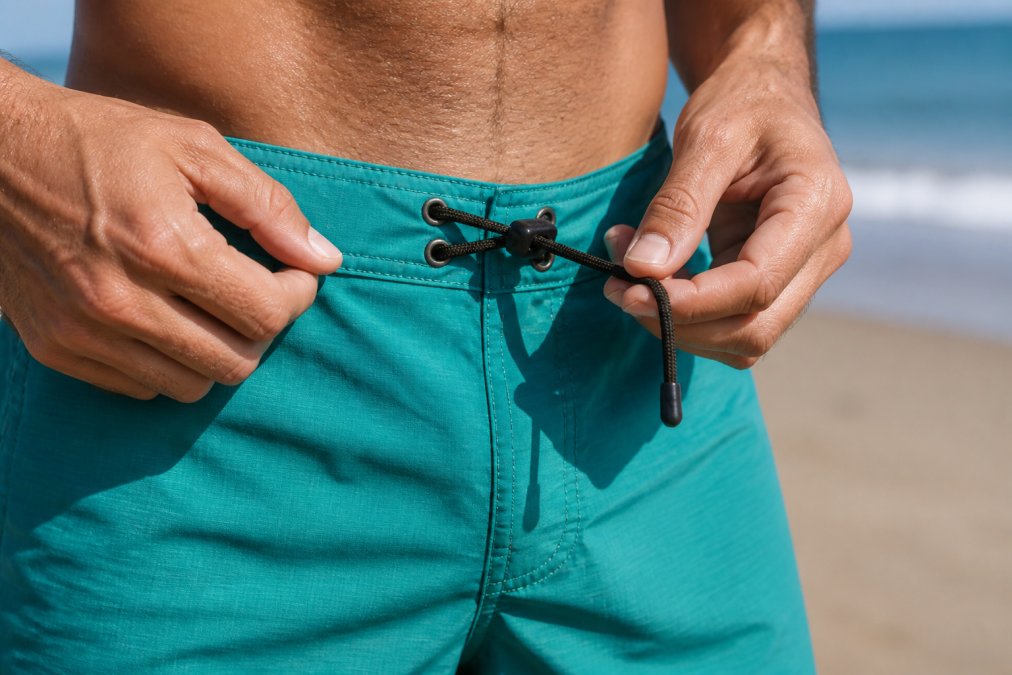
A truly durable garment is one you can fix. The most common failure points, a snapped drawcord, a loose waistband elastic, a pulled seam, are all repairable with basic tools. A drawcord replacement takes 10 minutes and a safety pin; a waistband elastic replacement requires a seam ripper, new elastic, and a basic sewing machine. Most surf shops and outdoor gear stores sell replacement elastic and drawcord by the yard. Learning these repairs can extend a suit's life by two to three seasons.
Feature Comparison: Our Top Picks for Durable Swimwear
South Bay Gear offers a lineup of men's mid-length beach shorts built on the same 100% polyester foundation, with variations in print and price. Each pair includes a relaxed fit, mesh lining, adjustable fabric drawcord, and two front side-entry pockets. Sizing runs from XS through 5XL.
| Product | Price | Fabric | Key Features | Best For |
|---|---|---|---|---|
| IYKYK Men's Mid-Length Beach Board Shorts | $37.20 | 100% Polyester | Mesh lining, drawcord, 2 pockets | Everyday surfwear |
| Tie Dye Men's Mid-Length Beach Shorts | $38.22 | 100% Polyester | Mesh lining, drawcord, 2 pockets | Casual beach style |
| Huntington Beach Men's Mid-Length Shorts | $37.80 | 100% Polyester | Mesh lining, drawcord, 2 pockets | Local pride and surf culture |
The Greasy Lee's Marine Street collection offers the same construction with Manhattan Beach heritage prints. All options include free shipping on select items.

Best Athletic Swimsuits for Surfing: Mid-Length Trunks
For surfing, the best athletic swimsuits for surfing prioritize a mid-length cut that stays put during paddling and duck dives. The IYKYK Men's Mid-Length Beach Board Shorts, priced at $37.20, offer a relaxed fit that does not restrict leg movement when kicking through waves. The 100% polyester shell dries quickly between sessions, and the mesh lining helps prevent chafing during long days in the water.
Surf trunks need a secure waistband more than anything else. The adjustable fabric drawcord helps keep them anchored, while the side-entry pockets lie flat. The Huntington Beach California version offers the same performance with a design that nods to South Bay surf culture.

UPF 50+ Swimwear for Beach Protection: Why Fabric Matters
UPF 50+ swimwear for beach protection is not just a marketing label; it represents a fabric's ability to block harmful UV radiation during prolonged sun exposure. The dense weave of 100% polyester in these board shorts provides natural UV resistance.
Sun exposure adds up over a long beach day. According to Skin Cancer Foundation guidelines on sun protection, covering up with tightly woven fabrics is one of the most effective ways to protect skin during peak sun hours. A pair of mid-length trunks that covers more leg surface reduces the amount of sunscreen you need to reapply and protects areas that often get missed.
The quick-dry nature of polyester also contributes to comfort and protection. When fabric stays wet against the skin, it can increase sun sensitivity and cause chafing during active movement. Trunks that wick moisture and dry rapidly keep you comfortable.
How to Care for Chlorine-Resistant Swimwear: Extend the Life
Knowing how to care for chlorine-resistant swimwear starts with a simple rule: rinse your trunks in cold fresh water immediately after leaving the beach or pool. Saltwater and chlorine crystals continue to break down fabric fibers when they dry into the material. A quick rinse removes most of these damaging elements before they set in.
The washing instructions on these board shorts are specific and worth following: wash in cold water, maximum 40 degrees Celsius or 104 degrees Fahrenheit (carelabels.co.uk). Use non-chlorine bleach if needed, iron with a cover, and never tumble dry. Direct sunlight drying should also be avoided because prolonged UV exposure degrades polyester over time.
A common mistake is tossing swim trunks in with a regular load of laundry using hot water and standard detergent. Hot water accelerates the breakdown of elastic fibers, and harsh detergents strip the fabric of its water-repellent properties. Hand washing or using a gentle cycle with cold water preserves both the color and structural integrity of the garment.
Beyond Washing: Repairing the Three Most Common Failures
Most care guides stop at washing instructions, but the real longevity secret is knowing how to fix what breaks. The three most common failure points on active swim trunks are the drawcord, the waistband elastic, and the seam stitching. Each is repairable at home with basic tools.
Drawcord replacement (10 minutes, $2-3 in materials): The original cord eventually frays or snaps at the knot. Use a seam ripper to open the waistband access hole, pull out the old cord, and thread a new one using a large safety pin. Polyester drawcord is preferred over cotton because it does not absorb water or mildew. Re-tie the cord with a stopper knot and stitch the access hole closed.
Waistband elastic replacement (30 minutes, $3-5 in materials): When the waistband stretches out and no longer holds the suit up, the elastic inside has failed. Use a seam ripper to open the waistband seam at one end, pull out the old elastic, and thread in a new piece of covered elastic (not exposed rubber). Overlap the ends by one inch, sew them together with a zigzag stitch, and close the seam.
Seam reinforcement (15 minutes, $2 in materials): If you notice a seam starting to pull, catch it before it becomes a hole. Use a needle and polyester thread to sew a few bartack stitches (dense zigzag) across the stress point. This is the same reinforcement technique used in manufacturing and will prevent the seam from unraveling.
Activity-Specific Maintenance: Surf vs. Pool vs. Beach Volleyball
The care routine should match your activity. Surfers need to focus on sand removal, sand gets trapped in the mesh lining and acts as an abrasive during the next session. Shake out the trunks vigorously after they dry, then rinse again to remove embedded particles. Pool swimmers face chlorine buildup: a monthly soak in one part white vinegar to three parts cold water (15 minutes, then rinse thoroughly) neutralizes residual chlorine. Beach volleyball players should inspect the knees and seat area regularly for pilling or thinning from diving on sand, and apply a fabric shaver to remove pills before they become weak spots.
When Repair Is Not Worth It: The Replacement Threshold
Repair is not always the right call. If the fabric has thinned, developed holes, or lost its color due to UV damage, no amount of stitching will restore its integrity. A general rule: if the suit has more than three repair points, or if the fabric shows visible transparency when held up to light, it is time to replace it. The polyester shell typically lasts for a long time with proper care, but the waistband elastic may need replacement periodically.
Common Mistakes That Ruin Swimwear Fast
The fastest way to ruin swimwear is leaving it balled up in a gym bag or the trunk of your car after a beach day. Trapped moisture promotes mildew growth, which weakens fabric and creates odors that are nearly impossible to remove. Always rinse and hang your trunks to dry as soon as possible.
Sitting on rough concrete or pool deck edges also damages the fabric. The abrasive surface wears down the outer layer of the polyester, leading to pilling and thinning that compromises both appearance and durability. Use a towel between your trunks and any rough surface.
Another frequent error is ignoring the care label entirely. These shorts are designed for specific washing conditions, and the non-chlorine bleach requirement exists because chlorine bleach breaks down the dye and fabric structure. Following the care instructions is the difference between trunks that last a single summer and those that remain beach-ready for years.
Which Durable Swimwear Should You Pick?
Your choice of durable swimwear should match how you actually spend your beach days. For surfers and active swimmers, the mid-length cut with a secure drawcord and quick-dry polyester is non-negotiable. For casual beachgoers who split time between the water and the sand, the same construction offers versatility, whether you are playing volleyball or grabbing lunch after a swim.
The Greasy Lee's Marine Street collection at $37.80 adds a layer of local heritage for those who want their swimwear to tell a story. The Manhattan Beach prints connect you to a surf legacy that dates back decades, and the polyester construction ensures the design does not fade after repeated exposure to sun and saltwater.
Conclusion
Building a swimwear rotation that survives active beach days requires attention to fabric, fit, and maintenance. Polyester construction, mid-length cuts, and proper care routines are the foundation of durable swimwear for active beach days. South Bay Gear has been part of the Manhattan Beach community since 1960, and our board shorts reflect that legacy of quality and durability. Each pair features 100% polyester fabric, mesh lining, and adjustable drawcords. Explore the collection and find trunks that are ready for whatever the ocean sends your way. South Bay Gear swimwear collection
Frequently Asked Questions
How can I tell if a swimsuit is high-quality and durable?
Check the fabric composition first. Look for 100% polyester or a polyester blend, which resists chlorine and saltwater better than nylon. Examine the stitching: double-stitched seams and reinforced stress points indicate longer life. Test the elasticity by gently stretching the fabric; it should snap back without losing shape. A quality swimsuit will have a mesh lining and an adjustable drawcord that stays secure during active movement.
What fabric is best for active, long-lasting swimwear?
100% polyester is the top choice for durable swimwear. It holds its shape, dries quickly, and stands up to chlorine and saltwater exposure. Polyester blends add stretch for comfort while maintaining strength. Avoid swimwear made primarily from nylon if you swim in chlorinated pools, as it breaks down faster. For active beach days involving surfing or swimming, polyester with a relaxed fit and mesh lining offers the best balance of durability and comfort.
Do UPF-rated swimsuits last longer than standard swimwear?
UPF-rated swimwear is designed with tightly woven fabric that blocks UV rays, and that same tight weave often makes it more abrasion-resistant and durable. To maintain both sun protection and longevity, rinse your swimwear in cold water after each use and avoid wringing it out.
What is the best way to care for my swim trunks to make them last?
Rinse your swim trunks in cold water immediately after swimming to remove chlorine, salt, and sand. Hand wash with a mild detergent, or use a gentle machine cycle in cold water. Hang it to dry in the shade instead. Following these steps helps prevent fabric breakdown and keeps the elastic waistband and drawcord working properly for many seasons.
South Bay Gear builds swimwear for people who treat the beach as an extension of their daily life. Whether you are surfing before work or spending Saturday with the family in Hermosa, our mid-length board shorts are crafted to perform and built to last. Shop all styles and find your next pair today.
0 comments