Table of Contents
- Quick Comparison: Durable Children Swimwear for Daily Use
- What Makes Swimwear Last Through Daily Wear
- Why Chlorine-Resistant Kids Swimwear Matters for Pools
- UPF 50+ Sun Protection Swimwear for Beach and Pool Days
- How to Wash Kids Swimsuits to Prevent Stretching
- Repair and Patching: Extending the Life of Daily-Use Swimwear
- Size-Inclusive Durability: Fitting Toddlers Through Teens
- Conclusion
- Frequently Asked Questions
Last Updated: September 20, 2026
Quick Comparison: Durable Children Swimwear for Daily Use
Durable children swimwear for daily use survives chlorine, saltwater, sunscreen, and repeated washing without losing shape. Whether a suit lasts one summer or three comes down to fabric blend, seam construction, and care. This guide from South Bay Gear covers what holds up and how to make any suit last longer.

If your kid swims four or five days a week, you know the frustration: suits fade, elastic gives out, and seams split by mid-July. Below are the construction details that matter, a wash routine, and repair tricks that add months to a suit's life.
| Feature | What to Look For | Why It Matters |
|---|---|---|
| Fabric blend | Polyester-spandex mix | Holds shape in chlorine |
| Seam type | Reinforced flatlock stitching | Prevents splitting under stress |
| UV rating | UPF 50+ protection | Blocks sun during long sessions |
| Care routine | Cold rinse after every swim | Extends elasticity by months |
| Fit | Snug but not tight | Reduces drag and wear points |
What Makes Swimwear Last Through Daily Wear
Fabric weight, weave density, and elasticity retention decide how a suit ages. A heavier, tightly woven knit resists pilling and thinning, while good elasticity retention means the suit snaps back instead of sagging.
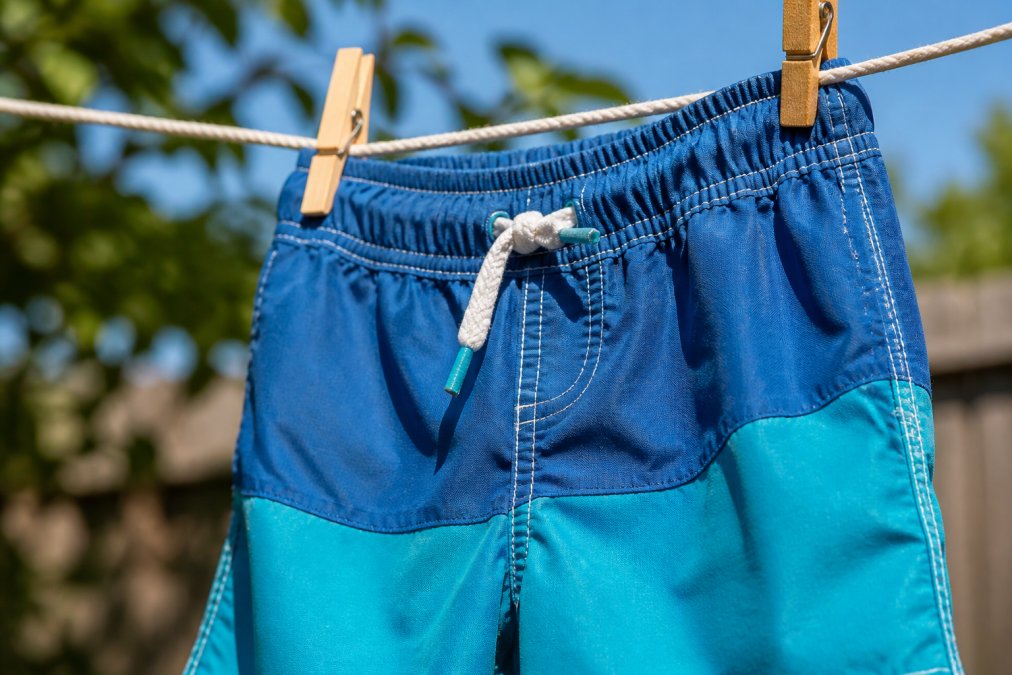
Fabric Weight, Weave, and Elasticity Retention
Look for a polyester-spandex blend rather than straight polyester or nylon. Spandex provides four-way stretch so the fabric moves with your child instead of straining at the seams, while polyester resists fading and chlorine breakdown better than nylon.
A common mistake is buying a suit that feels soft and thin in the store, that softness often signals a loose weave that will pill within weeks.
Seam Reinforcement and Abrasion Resistance
Flatlock seams lie flat against the skin and handle stretching better than standard overlock stitches, and reinforced stress points at the waistband and leg openings prevent early blowouts. Abrasion resistance matters most for kids who sit on pool decks and slide on sand.
Real-World Stress Testing: What Actually Breaks First
Most durability claims come from brands, not parents. Consider the three stressors a daily-use suit faces: chlorine, abrasion, and mechanical strain.
Why Chlorine-Resistant Kids Swimwear Matters for Pools
Chlorine-resistant kids swimwear uses fibers that resist chemical breakdown, keeping stretch and color through daily pool sessions. Standard swim fabric degrades faster, losing elasticity and developing a stretched, faded look.
UPF 50+ Sun Protection Swimwear for Beach and Pool Days
UPF 50+ sun protection swimwear blocks the vast majority of UV radiation reaching the fabric. UPF 50+ is the highest tier recognized for clothing, the standard to look for in kids' suits.
How to Wash Kids Swimsuits to Prevent Stretching
Washing kids swimsuits correctly is the easiest way to prevent stretching. Cold water, a gentle cycle, and air drying protect the elastic fibers that chlorine and heat break down.
Rinse, Wash, and Dry: A Simple Routine
Follow this routine after every use:
- Rinse in cold water immediately after swimming
- Wash on a gentle cycle with mild detergent, or by hand
- Skip the spin cycle and the dryer entirely
- Lay flat or hang to dry away from direct sun
- Never wring or twist the fabric to remove water
Heat is the enemy. Hot water and machine drying accelerate elastic breakdown, so a suit tossed in the dryer wears out faster than one that air dries.
Big Boys' Sharky Swimming Trunks Free →
Repair and Patching: Extending the Life of Daily-Use Swimwear
Most swimwear gets thrown out long before it needs to be. A small seam split or stretched waistband rarely means the suit is finished, and a few minutes of repair can add a full season of wear. Here is a repair playbook for the three failures that kill kids' swimsuits fastest.
Fixing a Split Seam
A seam split usually happens at the crotch, underarm, or waistband. You will need a needle, matching polyester thread, and a few minutes. Do not use cotton thread, it has no stretch and snaps the first time the suit flexes.
- Turn the suit inside out and align the split edges.
- Thread your needle with polyester or elastic thread.
- Use a zigzag or backstitch that allows the fabric to stretch. A straight stitch will pop under tension.
- Knot securely and trim the tail, leaving a small amount of slack so the repair moves with the fabric.
Patching Small Holes and Thin Spots
Small holes from snags or chlorine thinning are best handled with an iron-on patch made for stretch fabrics. Standard cotton patches will not stretch and peel off in the water.
- Cut a patch slightly larger than the hole, with rounded corners to prevent lifting.
- Place the suit on an ironing board with the hole flat.
- Position the patch over the hole, adhesive side down.
- Cover with a pressing cloth and press with a medium-hot iron for 20-30 seconds, following the patch manufacturer's instructions.
- Let it cool completely before stretching the fabric.
Replacing Stretched Elastic
When the waistband or leg elastic loses its snap, the suit sags and rubs. A tailor can often replace it for far less than a new suit, or you can do it yourself.
- Open the casing where the elastic is inserted, usually at a side seam.
- Pull out the old elastic and measure its relaxed length.
- Cut new elastic to about 90% of the original length, this gives a snug fit without being too tight.
- Thread the new elastic through the casing using a safety pin.
- Stitch the ends securely and close the opening with a zigzag stitch.
When to Repair vs. Replace
Not every suit is worth saving. If the fabric has widespread thinning, multiple repairs, or a faded, chalky appearance, the fibers are too degraded to hold a repair, retire it to a backup or play-only role. But for a single split seam or stretched waistband on an otherwise solid suit, repair is almost always worth the 15-30 minutes.
Size-Inclusive Durability: Fitting Toddlers Through Teens
Durability looks different at every age. A toddler's suit takes abuse from sand and pool decks, while a teen's must survive daily training and repeated stretching. Getting the fit right at each stage prevents the strain that shortens a suit's life.
Conclusion
Choosing durable children swimwear for daily use comes down to construction, care, and a willingness to repair instead of replace. Focus on polyester-spandex blends, reinforced seams, and UPF 50+ protection, then back that up with a cold-rinse routine and air drying.
Frequently Asked Questions
What features make children's swimwear more durable for daily use?
Look for chlorine-resistant fabric, reinforced seams, and a snug but flexible fit. Polyester blends with spandex hold their shape better than nylon over time. Four-way stretch and high-quality elastic waistbands also help prevent sagging. Rinsing after every swim removes chlorine and salt that break down fibers. Avoid tumble drying, which weakens elasticity. With the right fabric and care, daily-use swimwear can last a full season or longer.
How do I wash kids swimsuits to prevent stretching?
Rinse immediately after swimming in cold water to remove chlorine and salt. Machine wash cold on a gentle cycle with mild detergent, or hand wash. Never use fabric softener or bleach. Lay flat to dry away from direct sunlight. Heat is the main enemy of elasticity, so skip the dryer entirely. Following these steps keeps chlorine-resistant kids swimwear fitting properly for many more wears.
Are chlorine-resistant fabrics worth the investment for daily swimmers?
Yes, if your child swims several times a week. Chlorine breaks down ordinary swimsuit fibers quickly, causing fading, thinning, and loss of stretch. Chlorine-resistant kids swimwear uses tightly woven polyester blends that resist chemical damage. While the upfront cost is slightly higher, you replace the suit far less often. For daily pool use, the savings add up over a season.
Does UPF 50+ protection fade with frequent washing and daily wear?
UPF 50+ protection is built into the fabric weave, not applied as a surface coating, so it does not wash out the way sunscreen does. However, stretching, pilling, and thinning can reduce coverage over time. Rinsing after each use and avoiding harsh detergents help maintain the fabric integrity. When the suit becomes see-through or loses shape, replace it, because the sun protection weakens along with the fibers.
How do I choose between polyester and nylon for long-lasting kids' swimwear?
Polyester blends with spandex resist chlorine and hold color better than nylon, making them the stronger choice for daily pool use. Nylon feels softer and dries faster, which suits occasional beach trips. For durability, look for a polyester-spandex mix with four-way stretch and reinforced seams. Check the care label: cold wash and no tumble dry extends the life of either fabric significantly.
0 comments