Last Updated: October 22, 2026
Quick Summary
The 5 iconic surf spots in the South Bay for beginners are Manhattan Beach, Hermosa Beach, Redondo Beach, Torrance Beach and El Porto. Start at Manhattan or Redondo for soft, forgiving waves, then move to Hermosa or Torrance once you stand consistently, and save El Porto for when you're ready for punchier surf.
- Pick Manhattan Beach or Redondo Beach for your first session, then progress to Hermosa or Torrance.
- Skip surfing when the report shows swell over chest high or straight onshore wind.
- At Manhattan Beach, give the pier pilings a wide berth and practice in the inside whitewater.
- Torrance Beach offers a low-crowd lineup but limited parking and a longer, sometimes steep walk.
- The surfer closest to the peak has the right of way, so wait your turn in the lineup.
Table of Contents
- Why the South Bay Is a Beginner Surfer's Best Bet
- 1. Manhattan Beach: The Classic Starting Line
- Choosing Your First Spot: A Quick Decision Guide
- Frequently Asked Questions
Why the South Bay Is a Beginner Surfer's Best Bet
The 5 iconic surf spots in the South Bay for beginners share one thing: they let you learn without getting punished. This guide from South Bay Gear covers the breaks we grew up around, ranked by how forgiving they are when you're still figuring out how to stand up.
A beginner-friendly wave is one that breaks slowly over sand, stays small, and gives you time to paddle and pop up without a wall of water landing on your head.
What most guides miss is that the beach you pick matters more than the board you ride in your first month.
Below, we break down each spot, when to go, and what to watch out for.
What Makes a Wave Beginner-Friendly
Three things decide whether a break treats you well: the bottom, the size, and the shape.
Sand bottoms are soft and predictable. Rock and reef are not. A wave under about waist high gives you room to make mistakes. A slow, rolling shape means the wave pushes you rather than dumping you.
- Beach break over sand: forgiving falls, easy exits
- Small, mellow waves: time to think and stand
- Gentle whitewater: perfect for practicing pop-ups
How to Read Conditions Before You Paddle Out
Check three things before you leave the house: swell size, tide, and wind.
Small swell means small waves. A mid tide usually softens a beach break. Offshore wind grooms the surface; onshore wind turns it to chop and pushes you around.
We recommend a simple rule: if the report shows more than chest high, or the wind is blowing straight onshore, pick another day.
1. Manhattan Beach: The Classic Starting Line
Manhattan Beach is the best first stop for most beginners, full stop.
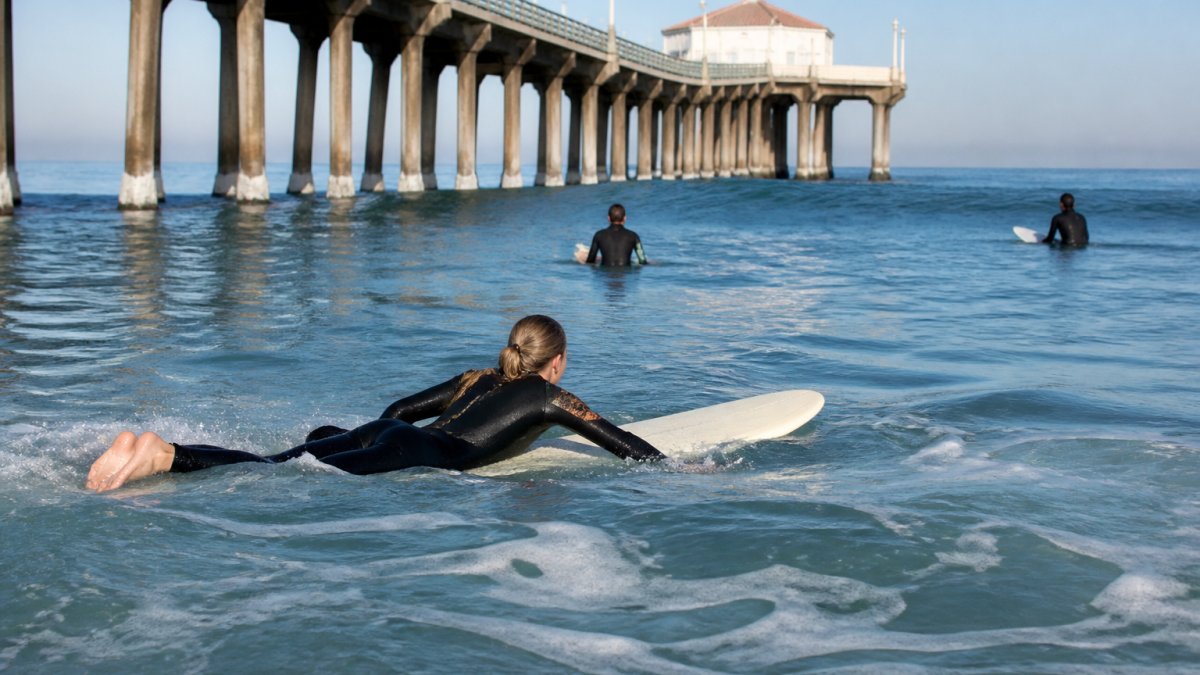
The wave here rolls in slowly and breaks over sand, which means soft falls and a short swim back to the lineup.
Classic Greg Noll Surf Tee, Surfing Shirt, Beachwear, Summer Apparel, Unisex →
(https://www.weather.gov/safety/ripcurrent-forecasts) is worth reading before your first session.Board and Head Safety
- Never ditch your board toward other people. Let go away from the crowd, or hold on and ride the whitewater in.
- Keep your board between you and the shore when a wave breaks so it does not get pushed into you.
- Learn to fall flat, away from your board, and cover your head when you surface.
- Wear a leash, always. It protects the people around you as much as it protects your board.
Etiquette Basics for a Crowded Lineup
The surfer closest to the peak has the right of way. Do not paddle through the lineup; go around. Do not snake a wave someone is already paddling for. Say hello, wait your turn, and you will find the lineup a lot friendlier than the horror stories suggest. Most conflicts start with someone paddling straight through the pack.
Choosing Your First Spot: A Quick Decision Guide
Pick Manhattan Beach or Redondo Beach for your first session.
Use this checklist before you go:
- Swell is under chest high
- Wind is light or offshore
- Tide is mid and moving
- You have a longboard or a soft-top
For gear, dress for the water and the walk back. A CDC guidance on sun protection is a good reminder that a hat and a long-sleeve tee matter as much as sunscreen.

Our Rick Surfboards Vintage Cotton Twill Cap is the kind of hat we wear from the sand to the parking lot, and our Greg Noll Mens Womans Old South Bay tee is what we pull on after a session.

For a deeper look at local conditions, Surfline's South Los Angeles surf zone guide breaks down each break by swell direction and tide.
Frequently Asked Questions
Which South Bay beaches have the gentlest waves for learning to surf?
Redondo Beach and Torrance Beach tend to offer the most forgiving conditions for new surfers. Redondo's sheltered orientation softens incoming swell and wind, while Torrance Beach is known for mellow waves that suit a range of skill levels. Manhattan Beach is a solid second option on smaller days, but its open exposure means conditions can pick up quickly. Check the surf report before you go and favor days with smaller swell and light wind for the easiest learning session.
What time of year is best for beginner surfing in the South Bay?
Late summer and early fall usually bring the most beginner-friendly window: warmer water, smaller and more consistent south swell, and lighter morning winds. Winter can deliver larger northwest swell and stronger currents, which are less ideal for a first season. Regardless of season, early morning sessions often mean glassier conditions and smaller crowds. Check tide and wind forecasts the night before, since a good tide can make an average day much easier at these south bay surf spots.
Do beginners need a surf lesson before surfing in the South Bay?
A lesson is not legally required, but one or two sessions with an instructor shortens the learning curve considerably. Instructors teach pop-up timing, paddling technique, and lineup etiquette, and they know which local peaks suit your level on a given day. If you skip lessons, start on a soft-top longboard in waist-deep water and practice takeoffs in the whitewater before paddling into the lineup. Many beginners also benefit from watching the lineup for ten minutes before entering.
How can beginners stay safe around other surfers?
Follow the basic rule that the surfer closest to the peak has the right of way, and never paddle straight through the lineup. Hold your board to the side when paddling out, and stay clear of anyone already riding a wave. At crowded breaks like Hermosa Beach, sit slightly inside or off to the shoulder rather than in the main takeoff zone. If you lose your board, cover your head and wait rather than swimming after it immediately. These habits keep you and everyone around you safer.
What should a beginner bring for a South Bay surf session?
Bring a soft-top longboard, a leash, and a wetsuit suited to the water temperature, which can run cool even in summer. Add a towel, sunscreen, and plenty of water. A cap or visor helps on bright days, and a beach towel like the Rick Surfboards Beach Towel ($32.03) keeps your post-session change comfortable. Leave valuables at home or locked out of sight, and check parking signs near each beach access point before you unload your gear.
Learning to surf in the South Bay is less about talent and more about picking the right beach on the right day. The five spots above give you a clear path from your first whitewater ride to your first real turn. South Bay Gear has been part of this coastline since 1960, and we make the hats, tees, and beach gear that fit the life around it. Shop all and find your next session in comfort.
0 comments